Featured Post

FrontPage صفحہ اول

Salaam Pakistan  is one of projects of  "SalaamOne Network" , to provide information and intellectual resource with a view to...

The Monti option of Italy- A possible solution for Pakistan

PAKISTAN will hold its next parliamentary and presidential elections this year. Many Pakistanis see this first ever completion of its term by an elected civilian government as cause for celebration.
Unfortunately, a full term has hardly enabled the government to respond to the country’s challenges. On the contrary, Pakistan’s problems have proliferated: terrorism, sectarian and ethnic violence, criminality and lawlessness, growing poverty, an energy crisis, financial decline and multifaceted external threats and interventions. Pakistan’s trajectory is towards a tragic explosion.
Pakistan’s multiple crises, at the core, are the consequence of bad governance or no governance.
Good governance flows from good leadership and good institutions. A country can progress only if its government wants it to do so. Misrule can only be prevented by robust institutions committed to the rule of law.
Sadly, since the 1960s, Pakistan’s rulers have systematically destroyed or corrupted the central institutions of the state. Our short history is a chronicle of disasters: the 1965 war, the destructive experiment in populist socialism; the country’s break up; the induction of Zia’s Islamism; the lost decade of democracy; externally dictated involvement in the disastrous ‘war on terror’ and, most recently, a Hobbesian era of ‘all against all’.
Today, as our leaders plan on ways to retain or regain power, policy analysts elsewhere are planning for contingencies that include: Pakistan’s takeover by extremists or its social and political disintegration. Foreign encouragement of secessionist and ethnic forces in Pakistan is ongoing. External intervention to prevent an ‘Islamist’ capture of Pakistan’s nuclear weapons is very much on the table.
To avert eventual disaster, structural and policy reforms are essential in at least four areas: security, economy, politics and bureaucracy.
Security: Pakistan is under military attack from within and without by terrorists: Al Qaeda, the TTP and affiliated militant groups; by sectarian groups; and from the insurgency in Balochistan, encouraged by Pakistan’s adversaries. India’s recent internal troubles could lead its politicians to once again use Pakistan as a political diversion.
For strategic clarity, Pakistan’s security policy needs to be guided by certain principles. One, the state cannot surrender its monopoly on the use of force. No parallel armies can be tolerated on Pakistan’s territory. Two, negotiations are only possible with those ready to accept the authority of the state. Three, all foreigners present in Pakistan without permission should be expelled. Four, Pakistan should be prepared to pursue those who attack its forces and civilians from across the border in Afghanistan (or elsewhere). Five, Pakistan’s security forces must be modernised and equipped to defeat terrorism and defend against conventional threats.
Economy: The government’s continuing reluctance to address the growing fiscal deficit will soon lead to financial collapse. It is essential to introduce a general sales tax and an agricultural income tax; restructure or divest loss-making government corporations; and halt the rampant corruption.
Concrete measures are also needed to: revive domestic and foreign direct investment; expand exports; overcome the energy crisis; build infrastructure; and actively support the private sector. Without these steps, Pakistan will soon become another “least developed country”.
Politics: Pakistan cannot become a modern state so long as it is led by feudal lords, rapacious tycoons and ethnic and religious parties. Pakistan’s politics can be changed. There should be adequate requirements to hold political office including a valid college degree; taxpayer status; no criminal record. Electoral districts dominated by feudal leaders should be reconfigured to break their monopoly. Urban centres should have larger representation to reflect the demographic shift to the cities. The representation of technocrats should be expanded. A strict ban should be imposed on the foreign funding of any political party or representative.
Bureaucracy: Pakistan’s bureaucracy has become an impediment to the country’s socio-economic development. The characteristics of a good bureaucracy are: functional competence; efficient execution and impartiality. These attributes can be achieved in Pakistan through merit-based selection; market-based remuneration; high reward for performance; severe penalties for corruption, partiality, negligence and incompetence. To start, it is essential to eliminate the corrupt, inefficient and partisan officials currently installed in various government offices.
Given their desire to win votes and placate their own constituencies, it is unlikely that any of the major parties will sponsor or endorse such bold but probably unpopular measures.
In the past, policy paralysis would have led to a military takeover. Fortunately, the army’s past unhappy experiences and present preoccupations seem to have precluded this option. A democratic and legal alternative is required. This could be the Monti option.
Eleven months ago, when no political party or leader was prepared to take the onus for imposing unpopular austerity in Italy, agreement was reached to instal an unelected economist, Mario Monti, as prime minister at the head of a ‘technocratic’ government. The departing Monti has saved the Italian economy, even if his success has been incomplete.
The Monti option offers a possible avenue for Pakistan to undertake structural reform and make the policy corrections required to stave off future disaster.
The task of inducting these essential, if unpopular, policies and reforms could be entrusted to the interim government which, under the Pakistan constitution, will be installed for 60 days to oversee the general elections. The mandate of the interim government can be enlarged to introduce the essential policies and reforms, and its period in office extended to 180 days to enable it to perform the extra functions.
It would be best if agreement could be reached, perhaps at an all parties conference, to provide such an extraordinary mandate to the interim government. If this is not possible, the measure could be legalised through a presidential or judicial decree.
If the Monti solution is not acceptable to the government or other political parties, they should prove their commitment to the country by introducing such reform measures themselves.
B/y Munir Akram, a former Pakistan ambassador to the UN.
http://dawn.com/2013/01/06/the-monti-option/
Videos Monti: http://in.video.search.yahoo.com/search/video?p=monti+italy&fr=sfp&fr2=piv-web

Mario Monti (born 19 March 1943) is an Italian economist who has been the Prime Minister of Italy since 2011, leading a government of technocrats in the wake of the ...
en.wikipedia.org/wiki/Mario_Monti
<<Free-eBooks Click here>>> 

Why don't they consider demands of Tahir Qadri?

The 10 symptoms of vitamin D deficiency you need to recognize

(NaturalNews) Taking vitamin D while still young may be good for the body in the long run. Results from a study conducted by the University of Zurich have confirmed that sufficient amounts of vitamin D taken consistently are necessary to maintain bone health.

Many people believe that maintaining healthy eating habits is enough, but only few foods naturally contain significant levels of vitamin D. According to Dr. Heike A. Bischoff-Ferrari, a faculty of UZH, in order to get adequate levels of vitamin D through diet alone, two servings of fatty fish like salmon or mackerel would have to be consumed every day. It is thus necessary to increase vitamin D levels in the body through sufficient sun exposure and supplementation in order to use the sunshine vitamin's full potential for maintaining proper body functioning.

This misconception about maintaining D levels through diet does have a degree of ground since vitamin D is not a stand alone vitamin. To perform many functions, vitamin D works in cooperation with other vitamins like magnesium, which can be found in leafy green vegetables such as spinach. This unique characteristic of vitamin D has contributed to the management of many chronic illnesses.

The many faces of vitamin D

Decades ago, health care professionals thought vitamin D was only good for keeping healthy bones and teeth. Recent advances in science, however, have put this vitamin in the spotlight by revealing its multifaceted role in the proper functioning of the human body and its ability to lower the risk of illnesses not formerly associated with it.

Despite the recent revelations about the potential of vitamin D, it appears that not everyone appreciates this discovery. The current lifestyle of working indoors has contributed to the growing number of vitamin D deficiency cases worldwide. This is compounded by the fact that not everyone is aware that he or she may be vitamin D deficient.

Am I vitamin D deficient?

The best way to discover vitamin D deficiency is to take a blood test that will measure the level of the vitamin in your blood. You can either ask your doctor to administer the test or buy a home test kit do the test yourself. However, you are certainly vitamin D deficient if you have any of the following ailments, and you need to consult with your doctor regarding your preventive, as well as curative, options as soon as possible.

1.) The flu - In a study published in the Cambridge Journals, it was discovered that vitamin D deficiency predisposes children to respiratory diseases. An intervention study conducted showed that vitamin D reduces the incidence of respiratory infections in children.

2.) Muscle weakness - According to Michael F. Holick, a leading vitamin D expert, muscle weakness is usually caused by vitamin D deficiency because for skeletal muscles to function properly, their vitamin D receptors must be sustained by vitamin D.

3.) Psoriasis - In a study published by the UK PubMed central, it was discovered that synthetic vitamin D analogues were found useful in the treatment of psoriasis.

4.) Chronic kidney disease - According to Holick, patients with advanced chronic kidney diseases (especially those requiring dialysis) are unable to make the active form of vitamin D. These individuals need to take 1,25-dihydroxyvitamin D3 or one of its calcemic analogues to support calcium metabolism, decrease the risk of renal bone disease and regulate parathyroid hormone levels.

5.) Diabetes - A study conducted in Finland was featured in Lancet.com in which 10,366 children were given 2000 international units (IU)/day of vitamin D3 per day during their first day of life. The children were monitored for 31 years and in all of them, the risk of type 1 diabetes was reduced by 80 percent.

6.) Asthma - Vitamin D may reduce the severity of asthma attacks. Research conducted in Japan revealed that asthma attacks in school children were significantly lowered in those subjects taking a daily vitamin D supplement of 1200 IU a day.

7.) Periodontal disease - Those suffering from this chronic gum disease that causes swelling and bleeding gums should consider raising their vitamin D levels to produce defensins and cathelicidin, compounds that contain microbial properties and lower the number of bacteria in the mouth.

8.) Cardiovascular disease - Congestive heart failure is associated with vitamin D deficiency. Research conducted at Harvard University among nurses found that women with low vitamin D levels (17 ng/m [42 nmol/L]) had a 67 percent increased risk of developing hypertension.

9.) Schizophrenia and Depression - These disorders have been linked to vitamin D deficiency. In a study, it was discovered that maintaining sufficient vitamin D among pregnant women and during childhood was necessary to satisfy the vitamin D receptor in the brain integral for brain development and mental function maintenance in later life.

10.) Cancer - Researchers at Georgetown University Medical Center in Washington DC discovered a connection between high vitamin D intake and reduced risk of breast cancer. These findings, presented at the American Association for Cancer Research, revealed that increased doses of the sunshine vitamin were linked to a 75 percent reduction in overall cancer growth and 50 percent reduction in tumor cases among those already having the disease. Of interest was the capacity of vitamin supplementation to help control the development and growth of breast cancer specially estrogen-sensitive breast cancer.

Prevention is proactive

These various health conditions associated with vitamin D deficiency need not be something to fear. A proactive approach to prevention can assist in the avoidance of the many chronic diseases associated with vitamin D deficiency. For one, thousands of dollars can be saved, not to mention the peace of mind, simply at the cost of taking a walk under the sun. Save the umbrellas for the rainy days.
http://www.naturalnews.com/035089_vitamin_d_deficiency_signs_symptoms.htmlSources for this article:
http://www.foxnews.com/story/0,2933,510299,00.html
http://journals.cambridge.org
http://www.vitamindcouncil.com
http://www.naturalnews.com/032222_breast_cancer_vitamin_D.html

Learn more: http://www.naturalnews.com/035089_vitamin_d_deficiency_signs_symptoms.html#ixzz2HD05cKvn
<<Free-eBooks Click here>>> 

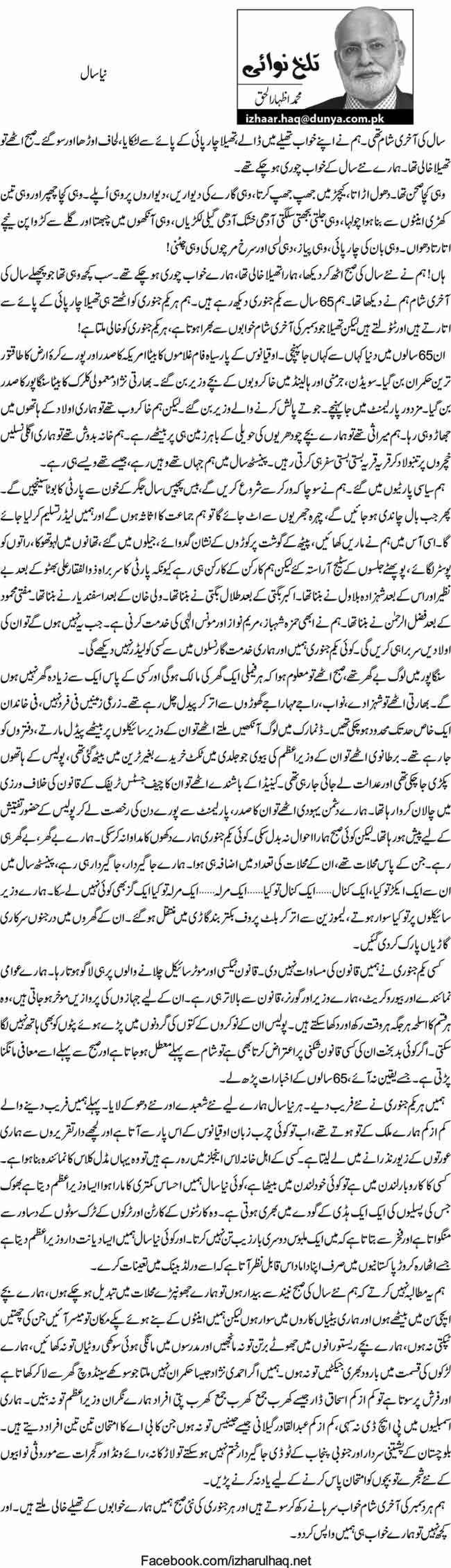
New Year ...

http://dunya.com.pk/news/authors/detail_image/1394_66713691.jpg
<<Free-eBooks Click here>>> 

Bilawal Bhutto Zardari- 10 Questions?

Corruption Cobra

.http://jang.com.pk/jang/jan2013-daily/01-01-2013/editorial/col13.gif
More:

Every one talks of corruption, corrupt political system which protects the rich and corrupts, insisting that this system must be changed... but how? People do come out with solutions which are difficult to implement. Here is the ...
Apr 12, 2012
Corruption Cobra: کرپشن کا شیش ناگ. Was Pakistan created after lot of efforts and blood of millions for these corrupt cobras? If no, what have you done so far? Least should express your opinion to people around, create ...
The Muslim world has the unique distinction of being ruled by the corrupt dictators and kings .The wave of people uprising for change, freedom, democracy and justice has swept across the Middle East. Pakistanis are however ...
While discussing corruption, it was pointed out that there are about 1200 politicians in the assemblies, why corruption by these 1200 people is discussed? Are there only 1200 politicians who are corrupt and no one else?
Cure Corruption Eradicate Terrorism. Pakistani Nation cries and bleeds at hands of corrupt practices which effects majority of society. Few benefit and successfully make others hostage to this corrupt culture. These few play ...
مسلمان ملکوں کي مجموعي آبادي کرہ? ارض کي کل آبادي کا تقريباً 23فيصد ہے جبکہ دنيا کے رقبے ميں اسلامي دنيا کا حصہ بھي تقريباً اتنا ہي ہے? اسلامي ممالک 2011ء ميں بيروني قرضوں کے تقريباً 1683/ارب ڈالر کے مقروض ...
Around 2 millions lost their lives during partition of India and creation of Pakistan in 1947. Thereafter hundreds of soldiers have lost their lives while defending Pakistan. If the corruption scandals in defence purchases are true, ...
<<Free-eBooks Click here>>> 

Jinnah, Ideology of Pakistan and present Politics

While some prefer to emphasise the economic independence within secular Pakistan, others dream of theocracy like Iran. They try to support their perceptions by misquoting and twisting sayings of Muhammad Ali Jinnah, the founder of Pakistan. Both are far from the reality. This fundamental question has been settled through Objectives Resolution, adopted by first constituent assembly on March 9, 1949, and subsequently by all assemblies till now. Any ambiguity was further clarified by Liaquat Ali Khan, the 1st Prime Minister of Pakistan, also a close associate of Muhammad Ali Jinnah, in his speech on the Objectives Resolution, March 9, 1949. 
"Pakistan was founded because the Muslims of this sub-continent wanted to build up their lives in accordance with the teachings and traditions of Islam, because they wanted to demonstrate to the world that Islam provides a panacea to the many diseases which have crept into the life of humanity today."
"Islam does not recognize either priesthood or any sacerdotal authority; and, therefore, the question of a theocracy simply does not arise in Islam. If there are any who still use the word theocracy in the same breath as the polity of Pakistan, they are either labouring under a grave misapprehension, or indulging in mischievous "propaganda."
"The Preamble of the Resolution deals with a frank and unequivocal recognition of the fact that all authority must be subservient to God. It is quite true that this is in direct contradiction to the Machiavellian ideas regarding a polity where spiritual and ethical values should play no part in the governance of the people and, therefore, it is also perhaps a little out of fashion to remind ourselves of the fact that the State should be an instrument of beneficence and not of evil."

"The Muslim [in Pakistan] shall be enabled to order their lives in the individual and collective spheres in accord with the teachings and requirements of Islam as set out in the Holy Quran and the Sunnah"
[Excerpts: Liaquat Ali Khan, the 1st Prime Minister of Pakistan, on the Objectives Resolution, March 9, 1949]
http://jang.com.pk/jang/dec2012-daily/25-12-2012/col4.htm
More on Pakistan: http://pakistan-posts.blogspot.com/p/why-pakistan.html
<<Free-eBooks Click here>>> 

Your stake in Palestine

ONE would think it impossible to maintain a flicker of hope when recently Gaza was the site of ceaseless bombs raining down from the skies.

But if there’s one thing the Palestinians have in spades it’s boundless optimism, and never was it more evident than in the aftermath of the United Nations General Assembly vote on the statehood of Palestine.

I watched the vote with my husband, on TV in our hotel room in Tel Aviv with a distinct sense that we were missing the party. A couple of doors down, our Palestinian colleagues were on Facebook attempting to celebrate as best they could.

For six days we had been hosted in turn by the Jordanian, Palestinian and now Israeli offices of the environmental organisation Friends of the Earth-Middle East, and taken to see environmental and heritage sites in their respective countries. All three offices were converging on Tel Aviv the night of the vote, to attend a meeting scheduled the next day.

After a meeting at the Friends of the Earth Israeli office, the various factions disbanded, and we headed back to Bethlehem with the Palestinian organisation.

With the General Assembly vote in hand, the world now braced itself for the inevitable repercussions that would no doubt be born by the newly anointed state.

Meanwhile, the Palestinians accompanying us were in a more buoyant mood and planning for the future. It was during that journey that I learnt the true significance of the vote.

News media identified the immediate benefit of the vote as paving the way for membership to the International Criminal Court, which in turn would allow Palestine to seize the court with claims of war crimes against Israel.

My Palestinian friends in the meanwhile had more laudable ambitions; ones which had more to do with a functioning state than the knee-jerk reaction to immediately confront their oppressor.

Apart from the suggestion to shelve the shekel for a national currency, the possibility of an international airport was also put forward, which struck a chord with me, having encountered the capriciousness of Israeli immigration days earlier.

In fact, since returning from Palestine, I’ve been inundated with queries from Pakistanis as to how I made it into the occupied territories, and I’m afraid the foreign passport I possess was the key to my entry, but not my guarantee.

Israeli immigration seems to welcome only two flavours of tourist: Jewish and Christian evangelical. The rest are likely to receive a grilling, which may vary in intensity.

Needless to say it’s the main impediment to travelling to Palestine, and increases manifold if you’re Palestinian and becomes impossible if you have a passport “not valid for travel in Israel”.

Now consider how an international airport in the West Bank would no longer be subject to Israeli immigration control and visits to Palestine whether for tourism, business or otherwise could become a distinct reality, even for Pakistani passport holders. Admittedly, the Israeli military force destroyed Palestine’s Yasser Arafat International Airport in Gaza in 2001, but control over your airspace (and territorial waters) is a legal right conferred through statehood, and Palestine is now entitled to exercise it.

Israeli restrictions on movement of Palestinians are key to the occupation and one envisages ample resistance to the notion of an international airport in the occupied area. If an international airport is to come, it will come as a response to international pressure.

The General Assembly vote signals a new weariness towards the continuing occupation, and a volatile Middle East in the wake of the Arab Spring has made it harder to predict responses to Israeli excess.

Whilst one may argue that our decision not to recognise Israel prevents Pakistanis from interacting and extending material assistance, the same could also be said of Malaysia, whom the Palestinians hold in far greater esteem for their commitment to the Palestinian cause.

It was embarrassing to note that our being Pakistani held no greater significance in Palestine than the novelty of being the first many had met in the West Bank.

This is an opportunity for Pakistani foreign policy to go beyond claiming the Palestinians as brothers in name, and contribute through gestures of goodwill to the comity of nations.

Leading diplomatic efforts for an international airport would be welcomed by a majority of countries. And though it would not yield the immediate financial rewards Pakistan has grown accustomed to in the form of aid and assistance, it will benefit both economies in the long run in areas such as trade, tourism and education.

After all peace is only achievable if you can imagine new realities.

Never having suffered occupation I don’t think I will ever truly understand how deep the wounds go, but the resolve to build and progress in spite of the numerous challenges brings into stark relief how most of us view Palestinians solely through the prism of the Arab-Israeli conflict.

For those with a less charitable disposition who might view the pursuit for normalcy as naïve, or worse, as facilitating the occupation, I rely on the words of poetess Rafeef Ziadah who movingly responds to a journalist’s stock question: “Don’t you think that everything would be resolved if you would stop teaching so much hate to your children?”

“We Palestinians wake up every morning to teach the rest of the world life, sir” (from We Teach Life, Sir).

The writer is the owner of The Last Word bookshop and co-founder of The Life’s Too Short Short Story Prize.

Save Pakistan from Corrupt political leaders: Here is a Simple Solution


  1. Every one talks of corruption, corrupt political system which protects the rich and corrupts, insisting that this system must  be changed... but how? People do come out with solutions which are difficult to implement. 
  2. Here is the catch, law and procedure should be formulated to implement Section 62 of Constitution of Pakistan. "Islamic Ideology Council", "Supreme Court", "Federal Shari'ah Court" Election Commission of Pakistan and Parliament exists, which can do it but Why should they do it? People of Pakistan have to build up political pressure which will force them. Iran has a system of "Guardian Council", but it is Mullah rule. Why can't we formulate balanced body to oversee and implement it?
  1. We are Not looking for angels and saints, but reasonably good honest people according to normal moral standards of our society can be identified, corrupts filtered out from election process. 
  2. There are some obvious aspects, if some one has been bank loan defaulter, can he be trustworthy? What other evidence we need for such people except bank statement?
  3. Allah does not expect all Muslims to pious saints, though it is desirable  Allah has catagarised Muslims in 3 catoaaries: in Quran 35:32


ثُمَّ أَوْرَثْنَا الْكِتَابَ الَّذِينَ اصْطَفَيْنَا مِنْ عِبَادِنَا ۖ فَمِنْهُمْ ظَالِمٌ لِّنَفْسِهِ وَمِنْهُم مُّقْتَصِدٌ وَمِنْهُمْ سَابِقٌ بِالْخَيْرَاتِ بِإِذْنِ اللَّـهِ ۚ ذَٰلِكَ هُوَ الْفَضْلُ الْكَبِيرُ

"Then we caused to inherit the Book those We have chosen of Our servants; and among them is he who wrongs himself, and among them is he who is moderate, and among them is he who is foremost in good deeds by permission of Allah. That [inheritance] is what is the great bounty."[Quran 35:32] <<to see tafseer click >>

Further:
وَمَن يُطِعِ اللَّـهَ وَالرَّسُولَ فَأُولَـٰئِكَ مَعَ الَّذِينَ أَنْعَمَ اللَّـهُ عَلَيْهِم مِّنَ النَّبِيِّينَ وَالصِّدِّيقِينَ وَالشُّهَدَاءِ وَالصَّالِحِينَ ۚ وَحَسُنَ أُولَـٰئِكَ رَفِيقًا 
And whoever obeys Allah and the Messenger - those will be with the ones upon whom Allah has bestowed favor of the prophets, the steadfast affirmers of truth, the martyrs and the righteous. And excellent are those as companions.[Quran 4:69 see Tafseer >>>]

Keeping in view these categories, we should look for political leadership among moderate or pious categories. Top priority remains pious people but there is place for moderate Muslims, however habitual sinners and criminals should not be included. presently its other way round, which should be reversed.
  1. Instead of criticizing without suggesting any workable alternate solution, we must take first step, we shall not get 100% success but even partial initial success of 10 t0 20% good people getting in to system will have positive effects. Later this will increase, but only if we take 1st step....


Why the American and Westerners criticize their leaders for minor lapses? They force them to resign on matters considered petty in Pakistan standards [Richard Nixon, Bill Clinton]. Remember the famous saying; 'Army of lions ...
[62. Qualifications for membership of Majlis-e-Shoora (Parliament).


A person shall not be qualified to be elected or chosen as a member of Majlis-e-Shoora (Parliament) unless :-
(a) he is a citizen of Pakistan;
[64B][(b)he is, in the case of the National Assembly, not less than twenty -five years of age and is enrolled as a voter in any electoral roll in-
(i)any part of Pakistan, for election to a general seat or a seat reserved for non-Muslims; and
(ii)any area in a Province from which he seeks membership for election to a seat reserved for women.]
(c) he is, in the case of Senate, not less than thirty years of age and is enrolled as a voter in any area in a Province or, as the case may be, the Federal Capital or the Federally Administered Tribal Areas, from where he seeks membership;
(d) he is of good character and is not commonly known as one who violates Islamic Injunctions;
(e) he has adequate knowledge of Islamic teachings and practises obligatory duties prescribed by Islam as well as abstains from major sins ;
(f) he is sagacious, righteous and non-profligate and honest and ameen;
(g) he has not been convicted for a crime involving moral turpitude or for giving false evidence;
(h) he has not, after the establishment of Pakistan, worked against the integrity of the country or opposed the Ideology of Pakistan
Provided that the disqualifications specified in paragraphs (d) and (e) shall not apply to a person who is a non-Muslim, but such a person shall have good moral reputation; and
(i) he possesses such other qualifications as may be prescribed by Act of Majlis-e-Shoora (Parliament).]

More >>>>

Cure Corruption Eradicate Terrorism. Pakistani Nation cries and bleeds at hands of corrupt practices which effects majority of society. Few benefit and successfully make others hostage to this corrupt culture. These few play ...
مسلمان ملکوں کي مجموعي آبادي کرہ? ارض کي کل آبادي کا تقريباً 23فيصد ہے جبکہ دنيا کے رقبے ميں اسلامي دنيا کا حصہ بھي تقريباً اتنا ہي ہے? اسلامي ممالک 2011ء ميں بيروني قرضوں کے تقريباً 1683/ارب ڈالر کے مقروض ...
Around 2 millions lost their lives during partition of India and creation of Pakistan in 1947. Thereafter hundreds of soldiers have lost their lives while defending Pakistan. If the corruption scandals in defence purchases are true, ...
Corruption Cobra: کرپشن کا شیش ناگ. Was Pakistan created after lot of efforts and blood of millions for these corrupt cobras? If no, what have you done so far? Least should express your opinion to people around, create ...
First World War against Corruption. Corruption in Pakistan- A glimpse: http://www.youtube.com/playlist?list=PLA3AF10D98832383E. Please visit: http://aftabkhan.blog.com. Posted by Admin at 8:26 PM · Email ThisBlogThis!
The Muslim world has the unique distinction of being ruled by the corrupt dictators and kings .The wave of people uprising for change, freedom, democracy and justice has swept across the Middle East. Pakistanis are however ...
King of corruption Zardari appoints his frontman "Raja Rental" [Sindhi by birth disguised as Punjabi] pas new PM of Pakistan. ... MQM, PML Q , ANP and all those 211 MNAs who voted for him are party to this corruption.

Save Pakistan, End Corruption: Here is a Simple Solution : http://goo.gl/SrEB0
<<Free-eBooks Click here>>> 

War of pipelines


US Ambassador to Pakistan Richard Olson’s statement on December 10 against the Pakistan-Iran gas pipeline (IP) was not a mere reiteration of the economic interests of the United States and its allies; it has serious political connotations, in an area that has always been the battlefield in the Great Game. The expression of concern by Olson came just two days after President Asif Ali Zardari skipped his scheduled visit to Tehran to finalise the project with his Iranian counterpart. The US has been opposing the pipeline since its inception and favouring the Turkmenistan-Afghanistan-Pakistan-India (Tapi).

The IP, a $1.2 billion project, has been lingering since 1995 when a memorandum of understanding (MoU) was signed between Iran and Pakistan. The Iran-Pakistan Working Group was formed in 2003 to move the project forward. Islamabad told Tehran that in case India was unwilling to join in, the Iran-Pakistan gas pipeline would be pursued as an independent project. But in 2005, a memorandum of understanding was signed to include India. In 2007, India and Pakistan provisionally agreed to pay Iran $4.93 per million British thermal units, but India subsequently withdrew from the deal, ostensibly over concerns about the price and security but in fact due to opposition from the US. Under the accord signed in June 2010, Iran was to provide about 21.5 million cubic metres of gas a day to Pakistan for 25 years. The deal is extendable by five years and volumes can rise to 30 million cubic metres a day. The project is now in doldrums.

The projected 1,680-kilometre Tapi gas pipeline is backed by the Asian Development Bank (ADB). It has the potential to bring 3.2 billion cubic feet of natural gas per day (bcfd) from Turkmenistan’s gas fields passing near the cities of Herat and Kandahar, crossing into Pakistan near Quetta and linking with existing pipelines at Multan.

After India’s withdrawal from the Iran-Pakistan gas pipeline project, China showed interest in it. In October 2011 Dr Asim Hussain said, “Our dependence on Pak-Iran pipeline is very high and there is no other substitute at present to meet the growing demand of the energy.” This statement irritated the US, which has been pleading the case for Tapi since the 1990s. Tapi was initially designed to provide Turkmen gas to Pakistan through Afghanistan. In April 2008, India was also invited to join in. Pakistan’s cabinet gave approval to the Gas Pipeline Framework Agreement (GPFA) for Tapi in its meeting on October 27, 2010. On November 13, 2011, Pakistan and Turkmenistan initiated the Gas Sales and Purchase Agreement (GSPA), which is likely to make the multi-nation project operational by 2016.

From the very beginning, the US and its allies wanted Pakistan to abandon the project with Iran, which wants to diversify gas sales to Asian markets. Tehran’s projection of IP as a “peace pipeline” has the support of Russia and China. While regional powers desire to find a stable, reliable source of gas supplies, America and allies want to destabilise the entire region using militancy as a tool. The tussle over the Iran-Pakistan gas project and Tapi is not a mere economic battle but has far-reaching geopolitical dimensions.

It is a matter of record that the US and its Nato allies had decided to invade Afghanistan much before 9/11. The decision to this effect was taken in Berlin during the joint meeting of the council of ministers held in November 2000 in the wake of apprehensions regarding Tapi, in which powerful corporate entities, which actually rule the US and other capitalist countries, had financial interests. George W Bush appointed Afghan-born Zalmay Khalilzad, former aide to the American oil company Unocal, as special envoy to Afghanistan, nine days after the US-backed interim government of Hamid Karzai took office in Kabul. This appointment underscored the real economic and financial interests at stake in the US military intervention in Central Asia.

Khalilzad was intimately involved in the long-running US efforts to obtain direct access to the oil and gas resources of the region, largely unexploited but believed to be the second-largest in the world after those of the Persian Gulf. During the Bush government the state department was exploring the potential for post-Taliban energy projects in the region, having more than six percent of the world’s proven oil reserves and almost 40 percent of its gas reserves. On December 15, 2001, in an article titled ‘As the war shifts alliances, oil deals follow,’ the New York Times reported that during a visit in early December to this region, Secretary of State Colin L Powell said he was particularly impressed with the money that American oil companies were investing there. He estimated that $200 billion could flow into this region within the following decade.

As an advisor for Unocal, Khalilzad drew up the risk analysis of a proposed gas pipeline from the former Soviet republic of Turkmenistan across Afghanistan and Pakistan to the Indian Ocean. He participated in talks between Unocal and Taliban officials in 1997, which were aimed at implementing a 1995 agreement to build the pipeline across western Afghanistan. Unocal was the lead company in the formation of the CentGas consortium behind Tapi.

The Iran-Pakistan gas pipeline and Tapi are symbols of the New Great Game – the main goal of which is gaining control of oil and gas reserves in this region. As Frank Viviano wrote in the San Francisco Chronicle on September 26, 2001: ‘’The hidden stakes in the war against terrorism can be summed up in a single word: oil/gas. The map of terrorist sanctuaries and targets in the Middle East and Central Asia is also, to an extraordinary degree, a map of the world’s principal energy sources in the 21st century. It is inevitable that the war against terrorism will be seen by many as a war on behalf of America’s Chevron, Exxon, and Arco; France’s Total، FinaElf; British Petroleum; Royal Dutch Shell and other multinational giants, which have hundreds of billions of dollars of investment in the region.’’

This is the ugly reality of the ongoing war over gas pipelines in our region – US and its allies want to grab oil and gas resources for their economic interests benefiting huge multinational corporations in which the western ruling elites have substantial interest. In an article in Global Research, ‘Balochistan: Crossroads of Proxy War,’ Eric Draitser wrote on July 1: “China’s insatiable thirst for oil and gas makes the development of pipelines from Central Asia, Iran, and elsewhere invaluable to them. The Iran-Pakistan pipeline, the Turkmenistan-Afghanistan-Pakistan-India (Tapi) pipeline, and other projects all serve to increase the importance of Balochistan in the eyes of the Chinese. Additionally, the Chinese-funded Pakistani Gwadar Port is the access point for Chinese commercial shipping to the Indian Ocean and on to Africa. With all of this as a backdrop, one can begin to see just why Balochistan is so significant to the Chinese and, conversely, why the United States and its western puppets seek to destabilise it.”

Dr Ikramul Haq: adjunct professors at the Lahore University of Management Sciences. Emails: huzaima@huzaimaikram. com, ikram@huzaimaikram.com
http://www.thenews.com.pk/Todays-News-9-148121-War-of-pipelines

Was Pakistan creation of imperialist powers ? کیا پاکستان سامراجی تخلیق ؟

Why democracy matters? Rory Stewart:


The public is losing faith in democracy, says British MP Rory Stewart. Iraq and Afghanistan’s new democracies are deeply corrupt; meanwhile, 84 percent of people in Britain say politics is broken. In this important talk, Stewart sounds a call to action to rebuild democracy, starting with recognizing why democracy is important -- not as a tool, but as an ideal.

Rory Stewart -- a perpetual pedestrian, a diplomat, an adventurer and an author -- is the member of British Parliament for Penrith and the Border

Speakers Rory Stewart: Politician

Rory Stewart -- a perpetual pedestrian, a diplomat, an adventurer and an author -- is the member of British Parliament for Penrith and the Border.

Why you should listen to him:

Now the member of British Parliament for Penrith and the Border, in rural northwest England, Rory Stewart has led a fascinatingly broad life of public service. He joined the Foreign Office after school, then left to begin a years-long series of walks across the Muslim world. In 2002, his extraordinary walk across post-9/11 Afghanistan resulted in his first book, The Places in Between. After the invasion of Iraq in 2003, he served as a Deputy Governorate Co-Ordinator in Southern Iraq for the coalition forces, and later founded a charity in Kabul. 
To secure his Conservative seat in Parliament, he went on a walking tour of Penrith, covering the entire county as he talked to voters. In 2008, Esquirecalled him one of the 75 most influential people of the 21st century.
He says: "The world isn't one way or another. Things can be changed very, very rapidly by someone with sufficient confidence, sufficient knowledge and sufficient authority." 
"Stewart has long known that diplomacy of the deed is the only kind that matters."
Parag Khana

Quotes by Rory Stewart

  • “The last 20 years has been the age of intervention, and Afghanistan is simply one act in a five-act tragedy.”
  • “This idea that failure is not an option: It makes failure invisible, inconceivable and inevitable.”— on the war in Afghanistan
  • “Democracy is not simply a question of structures. It is a state of mind. It is an activity.”
  • “Despite the dubious statistics … democracy is a thing of value for which we should be fighting.”
  • “I have never met a villager who does not want a vote.”
  • “The point about democracy is not that it delivers legitimate, effective, prosperous rule of law. It's not that it guarantees peace with itself or with its neighbors. … Democracy matters because it reflects an idea of equality.”
  • “If democracy is to be rebuilt … it is necessary not just for the public to learn to trust their politicians, but for the politicians to learn to trust the public.”


Source: http://www.ted.com/talks/rory_stewart_how_to_rebuild_democracy.html


Read more: Free-Books  <<Click here>>>

ایک علمگیر کلبInternational Club-Islam

   
قدرت اللہ شہاب
خواب میں سروردوعالم صلی اللہ علیہ وسلم کی جانماز کاکونہ اپنے ہاتھ سے چھو لینے کے بعد مجھے یہ فکر دا من گیر ہوگئی کہ اب اگر میں نے خود نماز کی پابندی اختیار نہ کی تو یہ ایک بیٹھے بٹھائے ملی ہوئی نعمت عظیم کا کفران ہوگا۔ پابندی کا لفظ استعمال کرکے میں نے مبالغہ سے کام لیا ہے۔ جوں توں کرکے لشتم پشتم میں نے نماز ادا کرنے کی کوشش تو ضرور کی ہے لیکن سچی بات یہ ہے کہ میں ’’اقیموالصلوٰۃ‘‘ کا اصلی حق کبھی ادا نہ کرسکا۔ نماز کے ساتھ کسی قدروابستگی پیدا کرنا میرے لئے کافی کٹھن مرحلہ ثابت ہوا۔ یہ بات تو آسانی سے میری سمجھ میں آگئی کہ مختلف نوعیت کے دنیاوی کلبوں کی طرح اسلام بھی ایک طرح کا عالمگیر کلب ہے، دوسرے کلبوں کی رکنیت حاصل کرنے کے لئے طرح طرح کے پاپڑبیلنے پڑتے ہیں جو شخص کسی سماجی کلب کا ممبر منتخب ہونے میں کامیاب ہوجائے، اسے کلب کے تمام قواعد وضوابط پر سختی سے عمل کرنا پڑتا ہے۔ ماہانہ بل اور سالانہ چندہ پابندی سے ادا کیا جاتا ہے اور اپنے اعمال وکردار کو کلب کی روایات کے ساتھ شعور ی طورپر ہم آہنگ رکھنا پڑتا ہے۔ ان شرائط کی خلاف ورزی ہوجائے تو کلب کی کمیٹی بلیک بال Black Ballکرکے کسی بھی ممبر کو بیک بینی ودوگوش کلب کی رکنیت سے خارج کردیتی ہے۔ اس کے برعکس اسلام کچھ اور ہی طرح کا کلب ہے جوکوئی مسلمان ہو کر ایک بار اس کلب میں داخل ہوگیا، اس کی رکنیت تاحیات ہی نہیں بلکہ بعدازممات بھی مستحکم طورپر قائم رہتی ہے ۔ کلب کے قوانین کے مطابق وہ نماز پڑھے یا نہ پڑھے۔ سالانہ چندہ (زکوٰۃ) ادا کرے یا نہ کرے، یا کئی دوسری شرائط پر پورا اترے یا نہ اترے۔ یہ اس کے ذاتی افعال ہوتے ہیں جن کا معاملہ فقط اس کے اور اس کے خالق کے درمیان رہتا ہے کسی دوسرے شخص کو یہ اختیار حاصل نہیں کہ وہ ان کمزوریوں ،خامیوں اور بدنظمیوں کی بناپر کسی ممبر کو اسلام کے کلب سے خارج کرسکے۔ اس کے علاوہ نماز کی ایک اور دلنواز صفت بھی میرے ذہن میں پوری طرح سماگئی دنیاوی حکمرانوں کے علاوہ چھوٹے موٹے رئیسوں ، نوابوں اور سرکاری افسروں تک رسائی حاصل کرنے کیلئے جو دوڑ بھاگ، منت خوشامد ،سفارش اور دوسرے ہتھکنڈے استعمال میں لائے جاتے ہیں ان کی فہرست طویل ہے لیکن رب العالمین اور احکم الحاکمین کے دربار میں حاضر ہونے کے لیے صرف باوضو ہونے کی شرط ہے۔ اس کے علاوہ نماز کی نیت باندھنے میں نہ کسی پیر فقیر سے اجازت حاصل کرنے کی ضرورت ہے نہ کسی حکومت کے قانون کی پابندی میں لازمی ہے نہ کسی دفتر سے پرمٹ بنوانا پڑتا ہے۔ نہ کوئی ٹکٹ خریدنے کی شرط ہے۔ نہ کوئی شناختی کارڈ دکھانا پڑتا ہے۔ نہ کسی خاص جگہ یا مقام کو تلاش کرنے کی ضرورت ہے نہ کوئی پی اے راستے میں حائل ہے نہ کوئی دربان روکتا ٹوکتا ہے، انسان کے اپنے نفس کے علاوہ عبداور معبود کے اس رازونیاز میں کوئی حجاب بیچ میں نہیں آتا۔ یہ تو دکاندار پیروں فقیروں کی من گھڑت ہے کہ بیعت کے بغیر وہ خاص اسرار نہ بتائیں گے۔ وہ اسرار ہی کون سے ہیں جن کو وہ نہ بتائیں گے؟جن اسرار کی ضرورت تھی ان کو تو حضور صلی اللہ علیہ وسلم نے گلیوں اور بازاروں میں گھوم پھر کر اور پہاڑیوں اور منبروں پر چڑھ کر علی الاعلان بیان کردیا ہے۔ ان کے علاوہ دین میں کوئی راز ہیں نہ اسرار البتہ اشرار ضرور ہیں جن کی بدولت لوگوں کو جال میں پھنسا جاتا ہے۔ ایسے جعلی پیر اکثر جاہل ہوتے ہیں یوں منجملہ اسرار کے پانچ فن ہیں کیمیا، لیمیا ، ہیمیا ،سیمیااور رمیا ان میں کسی کا تعلق سونا بنانے سے ہے، کسی کا حبس دم سے، کسی کا روح منتقل کرنے کا تصرف حاصل کرنے سے، یہ سب دنیا دار شعبدہ بازوں، عاملوں اور جوگیوں کے استدراجی کرتب ہیں۔ دین سے ان کا دور کا بھی واسطہ نہیں اور نہ ہی تصوف کے حقیقی جوہر سے ان کا کوئی تعلق ہے۔ عقلی طورپر تو میں نے نماز کی آسائش سہولت اور افادیت کو کشادہ دلی سے تسلیم کرلیا لیکن عملی طورپر بڑی حد تک محرومی کا شکاررہا۔ نماز کا وقت آتے ہی میرے اعصاب پر کاہلی ، سستی اور کسل مندی کاایسا شدید حملہ ہوتا تھا کہ میں مایوس ہوکر یہ سمجھ بیٹھا تھا کہ ایسی نماز کا فائدہ ہی کیا جو رغبت اور شوق سے ادانہ کی جائے لیکن ایک روز قرآن کریم کی تلاوت کے دوران سورۃ النسا کی آیت نمبر142 نے اچانک میری آنکھیں کھول دیں۔ اس آیت کا ترجمہ یہ ہے:’’… اور جب نماز کو کھڑے ہوتے ہیں تو بہت ہی کاہلی سے کھڑے ہوتے ہیں، صرف آدمیوں کو دکھلاتے ہیں…‘‘ ٭٭٭٭
 http://dunya.com.pk/index.php?key=bklEPTgyNSZjYXRlSUQ9c3BlY2lhbF9hcmM=#.UL8Pv-SxVR0

ایک مجاہد کا خط۔تحریک آزادی کشمیر کے خلاف سازش...صبح بخیر…ڈاکٹر صفدر محمود - Shared via :  
وارث۔اگر خواب دیکھیں تو…جرگہ…سلیم صافی - Shared via Mobile: 
بحر جنوبی چین امریکی آکٹوپس پھندہ...زاویہٴ نگاہ…نصرت مرزا - Shared via Mobile: 
پاکستانیوں کے سات تضادات...ذراہٹ کے…یاسر پیر زادہ - Shared via Mobile: