Featured Post

FrontPage صفحہ اول

Salaam Pakistan  is one of projects of  "SalaamOne Network" , to provide information and intellectual resource with a view to...

Showing posts with label India. Show all posts

Never Forget Lessons of Indo-Pak War 1971 کبھی نہ بھولیں:


Independence was gained  in 1947 after lot struggle and sacrifices but just after 24 years, one part East Pakistan was lost, due to negligence and incompetence of leadership. 
بڑی جدوجہد اور قربانیوں کے بعد 1947 میں تقسیم ہند سے پاکستان قائم ہوا اور مسلمانوں نے آزادی حاصل کی جسے ہندو ذہنیت نے دل سے قبول نہ کیا اور شروع سے ہر وہ قدم اٹھایا جس سے پاکستان کو کمزرور اور ختم کے جاسکے- پاکستان کے حصہ کے اثاثہ جات روک لیے، ریاست حیدرآباد دکن ، جونا گڑھ اور کشمیر پر زبردستی قبضہ کیا کشمیرکا کچھ پاکستان ںے آزاد کروا لیا لیکن مقبوضہ کشمیر ابھی تک آزادی کی جدو جهد کر رہا ہے- مشرقی پاکستان مغربی پاکستان سے ایک ہزار میل دور ہمیشہ انڈیا کے لئے نرم ٹارگٹ تھا جہاں پر 20% ہندو آبادی جس کا معیشت اور نظام تعلیم پر قبضہ تھا بنگالی مسلمانوں کی برین واشنگ کا ہدف بن گیا- غیر مستحکم سیاسی نظام اور فوجی حکومت اس حساس معاملہ کو درست طریقہ اور عوامی خواہشات کے مطابق نہ ٹھیک کر سکی- صرف 24 سال بعد پاکستان کا مشرقی حصہ اعلی قیادت کی غفلت، لاپرواہی، نااہلی کی وجہ سے الگ ہو گیا جبکہ ٹیکتیکل لیول پر جوانوں اور افیسرز نے خون بہا کر دشمن کو روکے رکھا- جب 16 دسمبر 1971 کو جنگ ختم ہوئی تو دشمن کسی ایک بڑے شہر پر بھی قبضہ نہ کرسکا ما سوا “جیسور” جس کو سٹریٹیجک وجوہات کی وجہ سے ڈیفنڈ نہیں کیا گیا تھا >>>>>

Kashmir Options


Kashmir is an incomplete agenda of partition of India. Since 1947, India and Pakistan have fought three wars on this issue. According to UN resolutions, Kashmiris have to decide their accession to Pakistan or India through impartial plebiscite, which could not take place due to Indian reluctance. Recently, India revoked Article 370 of the Constitution, which granted special autonomous status to Kashmir, it was done to unilaterally integrate occupied Kashmir. This is a violation of the UN resolutions and the Simla bilateral agreement, which demands to maintain status quo until the final settlement. The US and world powers are emphasizing that Kashmir should be resolved bilaterally, though India has refused to hold talks with Pakistan. In the present scenario, while India has turned Kashmir into the largest prison of 9 million people, denying basic human rights and oppressing the Kashmiris' who want freedom from India, Pakistan cannot watch as a silent spectator. Nuclear armed India and Pakistan are closer to war. Jihad becomes obligatory for the Muslims to help the oppressed people of Kashmir. The tense situation requires an in-depth analysis to explore possible options..... [........]

INDEX


1 Introduction:


2 The Crusade:

3.US-Israel-India Nexus

4. Third Jewish Temple

5.Kashmir:

6.Amendment of Interim Constitution of AJ&K:

7. International Response

8.Is Pakistan Isolated?

9.Jihad and Qital (Combat , Warfare) :

   a.Responsibility of State:

   b.International Treaties:

   c. The Holy Qur’an on Jihad (Qital):

   d. Rules of Jihad - Warfare

   e. Principles of Conduct:

10. Options for Pakistan:

11. Simple Acts of Jihad: 

References/Links


or Download-PDF: http://bit.ly/2k0Vqpm
OR ... Read online....
English- updated : https://salaamone.com/kashmir/  
Urdu .. اردو ترجمہ   جہاد کشمیر ۔ تجزیہ اورآپشنز: https://salaamone.com/kashmir-ur/

جہاد کشمیر- آپشنز


کشمیر 1947 سے زیر التوا تقسیم ہند کا نامکمل ایجنڈا ہے- اس مسلہ پر انڈیا اور پاکستان تین جنگیں لڑ چکے ہیں- اقوام متحدہ کی قراردادوں کے مطابق، کشمیر کے پاکستان یا انڈیا میں کسی ایک سے الحاق کا فیصلہ کشمیریوں نے رائے شماری کے ذریعہ کرنا ہے ، جو ہندوستانی ہٹ دھرمی کی وجہ سے نہیں ہوسکا۔ حال ہی میں بھارت نے مقبوضہ کشمیر کو مکمل طور پر ہڑپ کرنے کے لئے آیین کے ا آرٹیکل 370 کو منسوخ کردیا جو کشمیر کو خصوصی حیثیت دیتا تھا ۔ یہ حتمی تصفیہ تک status quo اقامت برقرار رکھنے کے لئے اقوام متحدہ کی قراردادوں اور شملہ باہمی معاہدے کی خلاف ورزی ہے۔ امریکہ اور عالمی طاقتیں اس بات پر زور دے رہی ہیں کہ مسئلہ کشمیر دو طرفہ طور پر حل کیا جائے ، حالانکہ بھارت نے بات کرنے سے انکار کردیا ہے۔ موجودہ حالات میں جبکہ انڈیا کشمیریوں کے بنیادی انسانی حقوق سلب کرکہ ان پر ظلم و ستم کے پہاڑ توڑ رہا ہے ، پاکستان خاموش تماشائی نہیں بن سکتا ، انڈیا اور پاکستان میں جنگ کا شدید خطرہ ہے - اس لیے کشمیر میں جہاد ضروری ہو گیا ہے - ان حالات کا گہرائی میں تجزیہ اور ممکن آپشنز دریافت کرنے کی ضرورت کے پیش نظر یہ تحریر انگریزی اور اردو میں لکھی گئی۔.....[........]

انڈکس

1.مروجہ عالمی ماحول
2.صلیبی جنگ
3.یہودی تھرڈ ٹیمپلا
4.مریکہ اسرائیل۔ ہندوستان کا گٹھ جوڑ
5.غزوہ ہند
6.کشمیر
7.آزاد جموں و کشمیر کے عبوری آئین میں ترمیم
8.بین الاقوامی رد عمل
9.کیا پاکستان تنہا ہے؟
10.جہاد اور قتال (لڑائی ، جنگ)  
    ا۔ ریاست کی ذمہ داری  
    ب۔ معاہدات
   پ۔ جہاد مقبوضہ کشمیر
   ج۔جہاد (جنگ ،قتال)
   چ۔ احکام جہاد۔ – جنگ  
   خ۔جہاد (قتال)جنگ کے اصول
11. پاکستان کے لئے آپشنز
12. جہاد کےانفرادی فوری عملی اقدام
13. حوالہ جات / روابط۔

پڑھیں ۔۔۔۔

Related :

Jihad, Extremism

~~~~~~~~~~~~~~
Knowledge, Humanity, Religion, Culture, Tolerance, Peace

https://SalaamOne.com

    Pakistan , India Conflict 2019


    Indian Prime Minister  Modi’s actions, which have led to the shadow of war looming over the sub-continent were to achieve victory in the election in April for the simple reason that these actions have achieved nothing else. Modi’s lack of evolutionary growth as not just a leader, but as a humanitarian is evident, however, lest the selfish interests of a man looking to deceive his nation are prioritised above the survival of a billion and a half innocent Pakistanis and Indians, most without enough food to eat, it will lay testament to not just our lack of evolutionary growth as a people, but our fall into something beneath the human kind.  Keep reading ..... [........]

    Our Captured, Wounded Hearts: Arundhati Roy On Balakot, Kashmir And India ....[...... ]

    ~~~~~~~~~~

    DELHI IN DISNEYLAND

    By Fahd Hussain
    In a span of one week, India dropped its payload, its military reputation and its moral standing. What a week for Narendra Modi and his plans to dominate the escalatory and electoral ladders. Now both are in disarray.
    Many lessons should be drawn from the events unfolding after the Pulwama attack. Since we are still in the thick of the crisis — with the Line of Control (LoC) red hot — key takeaways of the post-Pulwama situation may best wait. But some things cannot, and should not, wait for the guns to fall silent.
    Remember the picture of the captured Indian pilot with a bloody nose? While the pilot’s nose may have already healed, India’s nose will not heal so soon. Here’s why:
    India has built around itself an aura of a global power whose time has come. For at least the last two decades it has been inflating itself as military-economic-cultural juggernaut that is gaining in size and strength with each passing year. While it may be true that India has made significant strides in all three areas, Indians made one unwitting mistake — they took their eye off the in-swinging ball. In the exuberance of sudden global attention, the Indian storytellers of the political-media combine veered from fact into fiction. Most did not detect this gradual transformation of the India story from what it was to what they wished it were. There were voters and viewers to be won and nothing wins them over more effectively than a well-told story.
    And so over the years, India began to genuinely believe that it was the Elevated One, the Designated One, perhaps even the Chosen One. The future, Indians said with earnest glee, was India’s. And the future was already here. In this future-draped present, many Indians believed, Pakistan was a fly that could be swatted when it buzzed too loudly in India’s ear.
    Delusions of grandeur were an organic by-product of this manufactured belief. The world began to see Indians weaving these delusionary strands into their social DNA and emitting them through their thoughts, attitudes and demeanour. Many Indians sprayed an air of misplaced superiority on themselves like cheap perfume and strutted around like peacocks. But superiority against whom? China? America? Russia? Even delusions have limits. Pakistan therefore became the natural comparison. By trashing Pakistan, bad-mouthing Pakistan, threatening Pakistan, many Indians perhaps subconsciously tried to validate their deeply-ingrained delusions.
    So we saw India’s politicians and media people obsessing about Pakistan. To them Pakistan was a carpet under which they could hide their own dirt, and perhaps their insecurities too. This peculiar obsession with Pakistan birthed a weird cycle of national hysteria in India: political discourse fuelled media’s poisonous rhetoric which in turn nourished popular Bollywood trash which then fed back into political bashing that provided sustenance to media’s prime-time obsession with Pakistan….And the cycle went on and on increasing in velocity and intensity with each passing day.
    India thought it was chasing Pakistan; in reality it was chasing its tail.
    As these delusions ballooned, so did their manifestations through words and actions. Behind the hissing of Indian anchors and the sneering of Indian columnists you could detect that hostility to Pakistan had changed to an air of superiority that had transformed into thinly-disguised arrogance articulated via sweet seething contempt. This contempt was borne with something deeper than cricketing rivalry or Kashmir or even the original wound they suffered in 1947 — no, this was visceral stuff.
    Not surprising then that every time in recent years when a conflagration happened, Indian politicians and commentators would threaten to “teach Pakistan a lesson”. Such a threat insinuated that India could, if it wanted to, sort Pakistan out, but wasn’t doing so because it could “tolerate” Pakistan. The assumption was that it was India’s restraint — not its inability — that was holding it back from swatting Pakistan like a fly. Delusions had taken on a life of their own, and were paying rich dividends both in terms of votes and ratings.
    All in India would have lived happily ever after in this bubble had they not decided to act upon it. Bubbles burst easily, you know.
    The cyclone of Politician-Media-Bollywood fuelled anti-Pakistan delusional hysteria peaked the day Indian aircraft violated our air space and dropped their payload on a Balakot hillside. The next 24 hours saw India experiencing genuine nirvana — the kind in which you go into a hypnotic paradise and wonder why the world is so beautiful, colourful and serene. Indians laughed and cried and hugged themselves while jumping up and down. They loved life and every single payload it had to offer. They were superior. They were powerful. It was all true. What Modi said, what media said, it was all true, true, true…
    And then, bam!
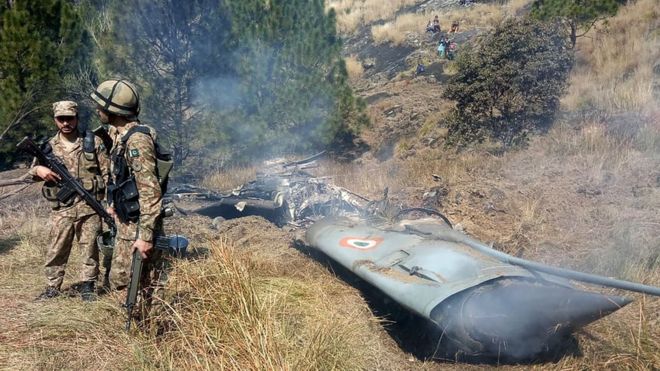
    High in the air above the LoC on February 28, the bubble of India’s huge delusion burst in a gigantic ball of fire and crashed on the ground along with the debris of a billion people’s aspiration of grandeur. The bloody nose was not Abhinandan’s alone.
    And suddenly, just like that, the hypnosis of a nation began to recede. People rubbed their eyes in Delhi, Mumbai, Haryana, Pune, Hyderabad and Bangalore and peered hard into the real world outside the bubble. And there they saw the ugly reality: There was no seminary in Balakot, there was no target hit, there were no 300 casualties, there was no Pakistani F16 downed, there was no revenge taken and there was no punishment meted. They rubbed their eyes more and saw the contours of the harsh truth staring back at them with cold, empty eyes: India did not have military superiority to ‘sort out’ Pakistan, India did not have operational strength to violate Pakistani territory without paying a price, India did not have the ‘story’ to justify victory of any sort and India did not have the regional or global muscle that it could flex at the expense of Pakistan.
    The felling of two Indian planes and the capture of one pilot was not enough damage to overturn decades of delusions; but it was enough to puncture the bubble. Modi tried to kill Pakistan’s deterrence, he ended up killing India’s dream.
    It’s a different world out there beyond the bubble; a world where the bleeding wound of Kashmir is more visible than ever before; where the policy of trying to ‘punish’ Pakistan is under greater criticism; where loud- mouthed anchor and their studio clowns in Noida are eating crow — and their pride — in dry mouthfuls; where media intellectuals out to de-clutter things are finding it impossible to de-clutter the emotional baggage of their own professional dishonesty, where Indian generals and air marshals are stammering like bumbling idiots; where the lies peddled repeatedly over the years by governments and the media are coming undone in the hills above Balakot and where millions of sane Indians may soon be asking themselves: all those dreams and delusions of grandeur — were they all lies, lies, lies…?
    And you thought India had just lost two planes?

    ‘K’ is for Kashmir By Munir Akram


    WHILE celebrating the nation’s 70th independence anniversary, we cannot forget that the ‘K’ in Pakistan’s name — Kashmir — is not (yet) part of our country. The men, women and children of India-held Kashmir (IHK) are even now engaged in a heroic David and Goliath struggle for freedom from India’s brutal occupation and oppression. Pakistan has done very little to support them.

    An equitable solution to the Jammu and Kashmir dispute will not be easy. However, for political, strategic, moral and legal reasons, Pakistan cannot resile from its position on Kashmir.

    By any objective criteria, Kashmir should have been part of Pakistan. The Kashmiris demonstrate each day their desire for integration with Pakistan. Pakistan has a political and moral obligation to support their aspirations and the political vision that inspired its own creation.


    Some among Pakistan’s elites appear to have lost the will to support the occupied territory’s struggle. 

    Pakistan is a party to the UN Security Council resolutions prescribing a UN-supervised plebiscite to enable the people of Jammu and Kashmir to exercise their right to self-determination. It is thus legally bound by this commitment.

    Kashmir is the source of the rivers that feed the Indus Valley. Water is an existential issue. Control over this life source cannot be legally surrendered to India.

    Kashmir is India’s Achilles heel. Its massive military deployment in Kashmir diminishes India’s capacity for aggression against Pakistan. Its brutal suppression of the Kashmiris erodes India’s moral and political claim to regional domination and great power status. The leverage which Kashmir provides Pakistan to achieve an ‘equal’ relationship with India should not be unilaterally discarded.

    Unfortunately, in the face of India’s growing power and the pressure exerted on Pakistan through the campaign against ‘Islamic terrorism’, some among Pakistan’s elites appear to have lost the will to support Kashmir’s struggle for self-determination and seem ready to accept the status quo in Kashmir.

    The much-touted peace plan negotiated with India during the latter years of the Musharraf government was no more than a dressed-up acceptance of the status quo. It may have proved to be even worse since it envisaged joint India-Pakistan ‘administration’ of both sides of Jammu and Kashmir, thus conceding that India has a legitimate presence in Kashmir. Moreover, since the ‘problem’ — insurgency and resistance — is in Indian-occupied Kashmir, why would Pakistan give India an ‘administrative’ role in Azad Jammu and Kashmir? The mischief that India could play there is not difficult to imagine. New Delhi could insist that the northern territories be included as part of the area being jointly administered. It could seek a role in the management of the Karakoram Highway and attempt to disrupt this sole and strategic road link between Pakistan and China. (It is not surprising that the plan was rejected by Syed Geelani, the one Kashmiri leader who has been the most vigorous and consistent in his support for Kashmir’s integration with Pakistan.)

    Unfortunately, intimidated by the US and India, the succeeding PPP and PML-N governments shied away from actively supporting the Kashmir cause.

    However, in a welcome signal, both the new prime minister and foreign minister have expressed support for the Kashmiri cause in their maiden statements to the media.

    Indeed, the present moment, when regional power equations are in flux and the Kashmiris have launched a popular indigenous struggle for freedom, may be opportune for Pakistan to promote a coherent strategy designed to halt India’s oppression, reassert the legitimacy of the Kashmiri freedom struggle, and intensify international pressure on India to accommodate Kashmiri rights and aspirations.

    Pakistan should firstly support several objectives which the Kashmiris themselves need to achieve: reunification and rejuvenation of the Hurriyat parties; selection of a deserving successor to the indomitable but aging Syed Geelani; delegitimising the puppet government in Srinagar; possible formation of a ‘shadow’ government; organisation of an ‘independent’ referendum (like the Iraqi Kurds) in Kashmir pending the UN plebiscite.

    Second, to regain legitimacy, the composition and profile of the Kashmiri resistance has to change. Its leadership must come mainly from new and younger Kashmiris untainted by association with any proscribed terrorist group.

    Third, the projection of the Kashmiri struggle and India’s oppression must be significantly improved in the mainstream and social media. This is vital to achieving the strategy’s objectives.

    Pakistan should initiate an active and sustained diplomatic campaign to exert international pressure on India. This campaign could include:

    One, formal submission of the proposal to send a UN commission to investigate human rights violations in IHK. If India blocks a visit, Pakistan can ask for an offsite report. Concurrently, Pakistan should seek endorsement for a UN resolution calling for an end to Indian firing on peaceful demonstrators; inhuman treatment of Kashmiri children and youth and women; curfews; media blackouts; emergency laws; and the arbitrary detention of Kashmiri leaders.

    Two, a formal proposal in the UN Security Council and General Assembly to adopt measures to prevent another Pakistan-India war, including: formalisation of the 2003 LoC ceasefire; expansion of the UNMOGIP and its deployment on both sides for comprehensive monitoring of the ceasefire; withdrawal of heavy artillery from LoC positions; exchange of solemn mutual assurances by Pakistan and India not to resort to force and not to interfere and intervene against each other, including through the sponsorship of terrorism.

    Three, a complaint to the International Court of Justice accusing India of violating the Genocide Convention.

    Four, approach the UN Security Council to implement its resolutions on Jammu and Kashmir by appointing a special envoy to promote demilitarisation of both sides of Jammu and Kashmir and to review and update the modalities for the organisation of a UN-supervised plebiscite there.

    Pakistan’s active promotion of the Kashmir cause will not provoke a war, and it need not divert Pakistan from economic development. Even if Pakistan’s proposals are not adopted in UN forums, their submission and discussion will exert diplomatic pressure on India and ease the suffering of the Kashmiri people. It may even convince India to seek a dialogue and a modicum of normalisation with Pakistan.

    The writer is a former Pakistan ambassador to the UN.
    https://www.dawn.com/news/1352648
    Related: http://pakistan-posts.blogspot.com/p/kashmir.html

       
    ~~~~~~~~~~~~~~~~~~~~~~
    SalaamOne, سلام  is a nonprofit e-Forum to promote peace among humanity, through understanding and tolerance of religions, cultures & other human values. The collection is available in the form of e-Books. articles, magazines, videos, posts at social media, blogs & video channels. .Explore the site English and Urdu sections at Index
    علم اور افہام و تفہیم کے لئے ایک غیر منافع بخش ای فورم ہے. علم،انسانیت، مذہب، سائنس، سماج، ثقافت، اخلاقیات اورروحانیت امن کے لئے.اس فورم کو آفتاب خان،  آزاد محقق اور مصنف نے منظم کیا ہے. تحقیقی کام بلاگز، ویب سائٹ، سوشل میڈیا، میگزین، ویڈیو چننل اور برقی کتابوں کی صورت میں دستیاب ہے.اس  نیٹ ورک  کو اب تک لاکھوں افراد وزٹ کر چکے ہیں, مزید تفصیلات>>>  Page Index - Salaam One 
     ..........................................................................
     مزید پڑھیں: 
    1. مسلما نوں اور علماء کے نام کھلا خط : آج کے حالات میں مسلم معاشرہ نظریاتی  ابتری اور انحطاط کا شکار ہے. مادہ پرستی، دہشت گردی، عدم برداشت، اور جہالت انسانیت، امن اور مذھب کے لیے خطرہ بن چکے ہیں- ان حالات میں صاحب علم و ذی فہم حضرات سے ممکنہ حل کی توقع کی جا سکتی ہے. ہمارا مقصد ہے کہ آپ کی توجہ ضروری حل پذیر مسائل کی طرف مبذول کرنا ہے تاکہ جلد حل تلاش کیا جا سکے- آپ کی توجہ اور مدد سے ہم کوشش کر سکتے ہیں کہ معاشرہ کو اس  گہری دلدل سے نکال سکیں. مکمل خط اس <<< لنک پر پڑھیں>>
    2. نظریاتی اور فکری کنفیوژن اور ممکنہ حل

    3. خطبات اقبال - اسلام میں تفکر کا انداز جدید Reconstruction of Religious Thought in Islam-  http://goo.gl/lqxYuw
    ~ ~ ~ ~ ~ ~ ~ ~ ~ ~ ~ ~ ~ ~ ~ ~ ~  ~ ~ ~  ~
    * * * * * * * * * * * * * * * * * * *

    War of Words Between India and Pakistan over Kashmir

    
    After hearing the reference to UN resolutions vis-a-vis Kashmir and demilitarization in Prime Minister Nawaz Sharif’s speech in the United Nations General Assembly earlier today, I thought I’d write a little something about the resolution adopted by the United Nations Commission for India and Pakistan (UNCIP), which underscores that demilitarization is a prerequisite for Pakistan as well before an impartial plebiscite could even be considered.

    In January 1948 India referred the Kashmir dispute to the United Nations (Rahman 1996: 15–19). Prime Minister Nehru took the dispute with Pakistan over Kashmir beyond local and national boundaries by bringing it before the UN Security Council, and seeking a ratification of India’s “legal” claims over Kashmir. The UN reinforced Nehru’s pledge of holding a plebiscite in Kashmir, and in 1948 the Security Council established the United Nations Commission for India and Pakistan (UNCIP) to play the role of mediator in the Kashmir issue. The UNCIP adopted a resolution urging the government of Pakistan to cease the infiltration of tribal mercenaries and raiders into J & K. It also urged the government of India to demilitarize the state by “withdrawing their own forces from Jammu and Kashmir and reducing them progressively to the minimum strength required for the support of civil power in the maintenance of law and order.” The resolution proclaimed that once these conditions were fulfilled, the government of India would be obligated to hold a plebiscite in the state in order to either ratify or veto the accession of J & K to India (Hagerty 2005: 19). Sir Zafarulla Khan, Pakistan’s Minister of Foreign Affairs, while discussing the volatile Kashmir issue at the UN on 16 January 1948, said that the maharaja’s government had attempted to brutally quell the spirit of revolution in Kashmir: “They were mowed down by the bullets of the State Dogra troops in their uprising but refused to turn back and received those bullets on their bared breasts” (United Nations Security Council: 65).

    This political stalemate led to the resumption of bitter acrimony in 1948. Sheikh Mohammad Abdullah voiced his disillusionment with the wishy-washy role of the UN Security Council. He expressly declared on 22 April 1948 that the Security Council resolution was “yet another feature of power politics on which the Security Council has embarked ever since its inception.” The Sheikh condemned the machinations of imperialist powers like the US and the UK which “saw Kashmir only as the neighbour of Russia and therefore an essential base in the encirclement of Russia for future aggression” (Krishen 1951: 19–20). A provisional cessation of hostilities, however, occurred in January 1949, with the establishment of a political and military truce.

    The ceasefire line left the Indians with the bulk of Jammu and Kashmir’s territory (139,000 of 223,000 square kilometres, approximately 63 per cent) and population. The Indians had gained the prize piece of real estate, the Kashmir Valley, and they also controlled most of the Jammu and Ladakh regions. These areas became Indian Jammu and Kashmir (IJK). The Pakistanis were left with a long strip of land running on a north–south axis in western J & K, mostly Jammu districts bordering Pakistani Punjab and the NWFP . . . a slice of Ladakh (Skardu), and the remote mountain zones of Gilgit and Baltistan (the Northern Areas or NA). (Bose 2003: 41)

    The de facto border carved in 1949 worked to India’s territorial and political advantage.

    The president of the UN Security Council, General A.G.L. McNaughton of Canada, endeavored to outline proposals to resolve the dispute. He proposed a program of gradual demilitarization and withdrawal of regular Indian and Pakistani forces, which were not required for the purposes of maintaining law and order from the Indian side of the cease-fire line. He also proposed disbandment of the militia of J & K, as well as of forces in Pakistani-administered “Azad” Kashmir. McNaughton recommended continuing the administration of the Northern Areas by the local authorities, subject to UN supervision. He recommended the appointment of a UN representative by the secretary general of the UN, who would supervise the process of demilitarization and procure conditions necessary to holding a fair and free plebiscite (Das 1950). Although McNaughton’s proposals were lauded by most members of the Security Council, India stipulated that Pakistani forces must unconditionally withdraw from the state, and that disbandment of Pakistani-administered Kashmir troops must be accomplished before an impartial plebiscite could be held (Rahman 1996: 90–91). In the interests of expediency, the UNCIP appointed a single mediator, Sir Owen Dixon, the United Nations representative for India and Pakistan, Australian jurist and war-time ambassador to the US, to efficiently resolve the conflict.

    A meeting of Sheikh Mohammad Abdullah’s National Conference was convened on 18 April 1950, in order to pass a resolution expressly warning the United Nations to take cognizance of Pakistan’s role as the aggressor (Korbel 2002: 170). The Communist writer Rajbans Krishen wrote an entire book to establish that the UN, its Commission and its representative, Sir Owen Dixon, were instruments of the US and the UK to annihilate the progressive movement pioneered by Sheikh Mohammad Abdullah in order to create in Kashmir, with the aid of Indian and Pakistani capitalists, a military base for an attack on the Soviet Union (ibid.: 257). The Communist leader in Kashmir, G.M. Sadiq, underscored the skepticism prevalent in Kashmir at the time:

    . . . the time has come for India to withdraw the Kashmir question from the Security Council . . . [as] the Kashmiris realized that the talk of fair plebiscite was a mere smokescreen behind which the Anglo-American powers were planning to enslave the Kashmiris. Nothing will suit them better than the façade of trusteeship in Kashmir behind which they can build war bases against our neighbours [sic]. (Delhi Express, 1 January 1952)

    Even as the Sheikh was aware of the infeasibility of withdrawing the Kashmir issue from the UN, the Sheikh-led NC reiterated its commitment to securing the right of self-determination for the people of Kashmir. It was suspicious of the UN, which was subservient to the hegemony of the US and the UK and flinched when it came to holding a plebiscite in Kashmir (Korbel 2002: 259). Sheikh declared that if a plebiscite was held in Kashmir and the people of Kashmir did not validate the accession to India that would not imply that, “as a matter of course Kashmir becomes part of Pakistan. . . . It would regain the status which it enjoyed immediately preceding the accession [i.e. independence]” (The Hindu, 26 March 1952). In 1949, the Sheikh candidly told Michael Davidson, correspondent of the London Observer, that, “Accession to either side cannot bring peace. We want to live in friendship with both the Dominions” (quoted in Saxena 1975: 33).

    The insistence on rejecting the trajectory charted out for them by the power structures of India, Pakistan and the west, and the urge to proclaim themselves a nation that is capable of exercising the right of self-determination has haunted the psyche of the Kashmiri people for decades. The distrust that pervaded the Kashmir political scene was outlined by the Communist paper People’s Age, which assessed the report of the United Nations Commission to the Security Council as an instrument of the political intrigues and machinations of imperialist powers against the engendering of democracy in J & K. It was critical of the complicity of Pakistan with these powers to destroy the beginnings of a democratic mass movement. It evaluated the attempt of the US and the UK to preside over a purportedly “free and fair” plebiscite that would be held “under the direction of the military and political agents of American imperialism, masked as the UNO Commission officers,” as a strategy on their part to create and secure war bases on the subcontinent against the Soviet Union and China (Krishen 1951: 38).

    As a placatory measure, in 1949 the UNCIP declared that “the Secretary-General of the United Nations will, in agreement with the Commission, nominate a Plebiscite Administrator who shall be a person of high international standing” (Dasgupta 1968: 402–03). Needless to say, the plebiscite was never held. The inability of the Indian government to hold a plebiscite is regarded by the Pakistani government as an act of political sabotage. The Indian government has been rationalizing its decision by placing the blame squarely on Pakistan for not demilitarizing the areas of J & K under its control, which was the primary condition specified by the United Nations for holding the plebiscite. Josef Korbel, the Czech UN representative in Kashmir, observes that ten weeks after the Security Council had passed an injunction calling on both India and Pakistan to demilitarize the Kashmir region within five months, Sir Owen Dixon found that not an iota of work had been done in that regard. Although both parties had agreed to hold a plebiscite in the state, they had failed to take any of the preliminary measures required for a free and fair referendum. Sir Owen Dixon, therefore, decided to take matters into his own hands and asked for the unconditional withdrawal of Pakistani troops. This was followed by a request to both countries to enable the demilitarization of Kashmir. The then Prime Minister of Pakistan, Liaquat Ali Khan, agreed to initiate the process by calling for the withdrawal of his troops.

    But this request, which would have enabled the maintenance of law and order, was denied by India (Korbel 2002: 171). The rationale that India provided for its denial was the necessity to defend Kashmir and maintain a semblance of order. India vehemently opposed any proposal that would place Pakistan on the same platform as India, and which would not take into account the incursion of Kashmir territory by Pakistani militia and tribesmen. In order to neutralize the situation, Sir Owen Dixon suggested that while the plebiscite was being organized and held, the entire state should be governed by a coalition government, or by a neutral administration comprising non-partisan groups, or by an executive formed of United Nations representatives. But his proposal did not meet with the approval he expected. He noted, in 1950, that the Kashmir issue was so tumultuous because Kashmir was not a holistic geographic, economic or demographic entity, but, on the contrary, an aggregate of diverse territories brought under the rule of one maharaja. In a further attempt to resolve the conflict, Sir Owen Dixon propounded the trifurcation of the state along communal or regional lines, or facilitating the secession of parts of the Jhelum Valley to Pakistan (Ganguly 1997: 3–4, 43–57; Rahman 1996: 4).

    Despite the bombastic statements and blustering of the governments of both India and Pakistan, however, the Indian government has all along perceived the inclusion of Pakistani-administered Jammu and Kashmir and the NA into India as unfeasible. Likewise, the government of Pakistan has all along either implicitly or explicitly acknowledged the impracticality of including the predominantly Buddhist Ladakh and predominantly Hindu Jammu as part of Pakistan. The coveted area that continues to generate irreconcilable differences between the two governments is the Valley of Kashmir. Dixon lamented:

    None of these suggestions commended themselves to the Prime Minister of India. In the end, I became convinced that India’s agreement would never be obtained to demilitarization in any such form, or to provisions governing the period of the plebiscite of any such character, as would in my opinion permit the plebiscite being conducted in conditions sufficiently guarding against intimidation and other forms of influence and abuse by which the freedom and fairness of the plebiscite might be imperiled. (The Statesman, 15 September 1950)

    Sir Owen Dixon nonetheless remained determined to formulate a viable solution to the Kashmir issue and suggested that a plebiscite be held only in the Kashmir Valley subsequent to its demilitarization, which would be conducted by an administrative body of UN officials. This proposal was rejected by Pakistan, which, however, reluctantly agreed to Sir Dixon’s further suggestion that the prime ministers of the two countries meet with him to discuss the viability of various solutions to the Kashmir dispute. But India decried this suggestion. A defeated man, Sir Dixon finally left the Indian subcontinent on 23 August 1950 (Korbel 2002: 174). There seemed to be an inexplicable reluctance on both sides, India and Pakistan, to solve the Kashmir dispute diplomatically and amicably. Sir Dixon’s concluding recommendation was a bilateral resolution of the dispute with India and Pakistan as the responsible parties, without taking into account the ability of the Kashmiri people to determine their own political future.

    After Dixon’s inability to implement conflict mitigation proposals, Frank Graham was appointed as mediator in 1951. Graham proposed the following: a reaffirmation of the ceasefire line; a mutual agreement that India and Pakistan would avoid making incendiary statements and that would reassert that Kashmir’s future would be decided by a plebiscite; steady attempts at demilitarization. But he was unable to dispel the doubts raised by the governments of India and Pakistan on securing the approval of both governments on a strategy for withdrawal of forces from the state, and agreement of both governments on a plebiscite administrator (ibid: 239–40). Given the unviability of its proposals, the UN soon bowed out of the political quagmire, leaving an unhealed wound on the body-politic of the Indian subcontinent: the Security Council resolutions affirming that the future of the state should be decided by its denizens.

    War of Words Between India and Pakistan at the United Nations by NYLA ALI KHAN.
    Source:  counterpunch.org

    Related:
    ~ ~ ~ ~ ~ ~ ~ ~ ~ ~  ~ ~  ~
    Humanity, Religion, Culture, Science, Peace
    A Project of Peace Forum Network: Overall 3 Million visits/hits

    Chaos in Kashmir: A Question of Identity

    The root cause of Kashmir’s unending violence? Its people have no place in India’s national identity:

    When three rebels were killed in a gunfight with security forces in Indian Kashmir, the government had to take radical measures: disrupt communication services, impose curfews, and ensure that anti-India leaders remain confined. The government’s main worry was that among those killed was one 22-year-old Burhan Wani – arguably the most prominent militant to operate in Kashmir in recent years – and his death was sure to trigger an outpouring of emotions on the streets of Kashmir. And trigger it did.
    The next morning, on July 9, thousands of enraged Kashmiris defied curfews and assembled at various locations to participate in Wani’s funeral. The funeral then turned into anti-India and pro-independence protests; as angry crowds clashed with police and paramilitary, the situation turned violent and deaths started to pile up. Over the next week, at least 33 people died in the clashes, and hundreds more were injured. As of this writing, the situation remains tense and the death toll has reached 40. With each additional civilian death, peace seems to become more elusive as funerals of the dead turn into massive protests and result in violent confrontations between the forces and the crowds.
    This cycle of chaos is not unprecedented. Anti-India and pro-independence protest movements have been a common occurrence in Kashmir since the late 2000s, right when a 1990s-era insurgency started to fade away. The current situation also follows a familiar pattern of weeks-long protests, clashes, and deaths that are initially sparked by a single incident. But what is rather more worrying this time, from New Delhi’s point of view, is the massive support expressed by the Kashmiri population for a fallen anti-India, secessionist militant. It is clear now that even though the 1990s-era insurgency is almost dead, the sentiments that lay at the core of it are still alive. Kashmiris have not acquiesced to Indian control of the region, and they continue to long for more indigenous political control and possible secession from India.
    Many reasons have been proposed to explain the anti-India and secessionist sentiments of Indian Kashmiris. For some, the problem is caused by their pro-Pakistan leanings and by Pakistan’s support for Kashmiri rebels and anti-India leaders; others blame the presence of extremist elements in Kashmir or the heavy-handed approach of the Indian security establishment toward Kashmiris; many are convinced that mediocre levels of education, high unemployment, and corruption are at the root of the problem. True, each of these issues bolster the anti-India and pro-independence feelings of Kashmiris, but they are not the root cause.
    In fact, many of these issues are themselves the end-result of something more fundamental and simple: that Kashmiris see themselves as a distinct nation and desire, naturally, to distinguish themselves as one, and achieve the global honor and status associated with nationhood. What better way to do that than achieving statehood and sovereign control of their lands? And to understand why Kashmiris feel so separate from India, we need to turn our attention to the construction of national identity in post-British India, which has failed to include Kashmiris.
    To unify the numerous ethno-linguistic groups in the country, national identity in India has been built on stories of Indian civilization and a history of colonialism. Kashmiris, for the most part, don’t easily see themselves of the same civilizational background as Indians, because of a substantial cultural divide, their historic remoteness from mainland India, and also their Muslim-majority character. In this age of interconnectivity, Kashmiris have become even more aware of the gap.
    When schools teach Indian colonial history to Kashmiri students, it becomes evident to the children that they are not studying their forefathers. The British didn’t colonize or rule over Kashmir. Kashmir, instead, was ruled by a Hindu king. As Indians were trying to get their independence from the British, Kashmiris were involved in their own struggle against the monarchy. Interestingly, the last move of the disliked king was to sign theInstrument of Accession, the legal document on the basis of which India claims and controls Kashmir. The document remains as unpopular in the Kashmiri psyche today as the king who signed it.
    Indian national identity on a popular level is also emboldened by the country’s wars and rivalry with Pakistan – the enmity serves as a unifying force. In Kashmir, however, Pakistan is seen as a benevolent state that repeatedly voices concern over the situation there and publicly supports its separation from India.
    To sum it all up, the same factors that have created and maintained a cohesive national identity in India have also alienated and excluded the Kashmiris. In fact, the very nature of the Indian identity is antithetical to Kashmiris. Thus, by now, they have developed their own separate national identity, and they resent Indian control of the region. The reason a 22-year-old rebel’s death was enough to trigger such massive unrest in Kashmir was the fact that he had become a symbol of Kashmiri nationalism and identity – for which he was ready to fight and die.
    No material factor can replace the longing for honor, status, and independence within a national group – it can only keep a temporary lid on it. The Kashmiri nation remains no different. Economy, jobs, corruption, religion, and human rights will only remain secondary issues until the presence of a Kashmiri national identity is accepted as a reality and efforts are made to represent it in the sovereign structures that govern Kashmiris. Until then, protests, violence, and deaths will continue to ebb and flow.
    To bring perpetual stability, the separatists have proposed their solution: an independent Kashmir. It’s time for the Indian state to offer a pragmatic counter.

    Chaos in Kashmir: A Question of Identity

    Hatim Bukhari grew up in Kashmir and studies International Relations at Florida International University.
    http://thediplomat.com/2016/07/chaos-in-kashmir-a-question-of-identity/
    Related:
    Kashmir -Genesis of problem: http://pakistan-posts.blogspot.com/p/kashmir.html
    ~ ~ ~ ~ ~ ~ ~ ~ ~ ~ ~ ~ ~ ~ ~ ~ ~  ~ ~ ~  ~
    Humanity, Religion, Culture, Science, Peace
     A Project of 
    Peace Forum Network
    Peace Forum Network Mags
    Books, Articles, Blogs, Magazines,  Videos, Social Media
    Overall 2 Million visits/hits