Featured Post

FrontPage صفحہ اول

Salaam Pakistan  is one of projects of  "SalaamOne Network" , to provide information and intellectual resource with a view to...

Showing posts with label Bad Governance. Show all posts

Bad Governance and Anarchy


Illustration by Abro

On ‘Anthropology and Politics’ seminar, one of the speakers said about anarchy. The anecdote that my colleague shared was about his father. He said that back in 1971, just days after the country lost its eastern wing (East Pakistan), someone stole the back tyre of his father’s motorbike. His father visited a nearby police station to report the incident but found the station extremely quiet. He said the cops were just loitering around, doing nothing. What’s more, the SHO refused to register a complaint against the tyre theft.

The SHO told his father that even if he did pen his complaint, it will remain on his table because “there is no government left.” My colleague was told by his father that everything seemed to have ground to a halt. Yet, there were no riots or looting. This little piece of information reminded me of the German anthropologist’s lecture during which he had explained that when a state collapses, and it seems there is no government left, a country does not immediately fall into anarchy. He added that it may actually take months for a collapsing country to slide into total social, economic and political chaos.

According to the anthropologist, this occurs because even though governance and the state itself have collapsed, the perception (in people’s minds) of their being strong institutions and in control remains ingrained for months. It is when this perception begins to erode that the country plunges into anarchy. The anthropologist had given examples of Bosnia and Somalia, saying that in these countries the state and government’s writ had begun to corrode and evaporate months before these realms eventually plunged into complete anarchy.

When there seems to be no government left, a country does not immediately fall into anarchy

I had initially not thought much about what my colleague had related to me. But after recalling the German professor’s lecture, I did wonder, what the SHO had meant when he told my colleague’s father, “There is no government left.” When did that happen in Pakistan?


I could not pinpoint such a claim anywhere when I looked through old newspapers from December 1971 or in books written about the immediate aftermath of the East Pakistan debacle. But only last week, while going through Hamid Khan’s excellent book Constitutional and Political History of Pakistan, I was taken aback when (in a chapter on the East Pakistan civil war) he writes that between December 18 and 20, 1971, “The country was virtually without a government.” Had this situation triggered riots and violence, I am sure it would have been more robustly documented, but the country had remained calm. This can also be explained by the German professor’s theory and observation that even when a government or state collapses (thus creating a huge political and social void) society does not immediately fall into this void. The mind takes some time to register the collapse because it is initially conditioned to believe that there is always someone on top in control.
By Farid Piracha ... Dawn.com

~~~~~~~~~~~~~~~~~~~~~~
SalaamOne, سلام  is a nonprofit e-Forum to promote peace among humanity, through understanding and tolerance of religions, cultures & other human values. The collection is available in the form of e-Books. articles, magazines, videos, posts at social media, blogs & video channels. .Explore the site English and Urdu sections at Index
علم اور افہام و تفہیم کے لئے ایک غیر منافع بخش ای فورم ہے. علم،انسانیت، مذہب، سائنس، سماج، ثقافت، اخلاقیات اورروحانیت امن کے لئے.اس فورم کو آفتاب خان،  آزاد محقق اور مصنف نے منظم کیا ہے. تحقیقی کام بلاگز، ویب سائٹ، سوشل میڈیا، میگزین، ویڈیو چننل اور برقی کتابوں کی صورت میں دستیاب ہے.اس  نیٹ ورک  کو اب تک لاکھوں افراد وزٹ کر چکے ہیں, مزید تفصیلات>>>  Page Index - Salaam One 
 ..........................................................................
 مزید پڑھیں: 
  1. مسلما نوں اور علماء کے نام کھلا خط : آج کے حالات میں مسلم معاشرہ نظریاتی  ابتری اور انحطاط کا شکار ہے. مادہ پرستی، دہشت گردی، عدم برداشت، اور جہالت انسانیت، امن اور مذھب کے لیے خطرہ بن چکے ہیں- ان حالات میں صاحب علم و ذی فہم حضرات سے ممکنہ حل کی توقع کی جا سکتی ہے. ہمارا مقصد ہے کہ آپ کی توجہ ضروری حل پذیر مسائل کی طرف مبذول کرنا ہے تاکہ جلد حل تلاش کیا جا سکے- آپ کی توجہ اور مدد سے ہم کوشش کر سکتے ہیں کہ معاشرہ کو اس  گہری دلدل سے نکال سکیں. مکمل خط اس <<< لنک پر پڑھیں>>
  2. نظریاتی اور فکری کنفیوژن اور ممکنہ حل

  3. خطبات اقبال - اسلام میں تفکر کا انداز جدید Reconstruction of Religious Thought in Islam-  http://goo.gl/lqxYuw
~ ~ ~ ~ ~ ~ ~ ~ ~ ~ ~ ~ ~ ~ ~ ~ ~  ~ ~ ~  ~
* * * * * * * * * * * * * * * * * * *

Good Governance and Pakistan پاکستان کا برا مسئلہ "گڈ گورننس" کا نہ ہونا ہے


THE historical judgement on governments is harsh. It says that governments have many butchers and few shepherds. However there is increasing interest in good governance. What is good governance? It is generally understood in its narrow meanings. An attempt is made here to present some of its less-known features.

Accountability, transparency and equality before the law are well-known attributes of a good government. There is rightly more stress on corruption. What Senator Cato said about Rome then is true of Pakistan today: “Simple thieves lie in prison and in stock; public thieves walk abroad in gold and silk.”

Corruption leads to misallocation of resour­­ces. For example, it could lead to misallocation of investment and public infrastructure away from their most productive use. It can also lead to misallocation of talent as self-interested individuals seek rewards in occupations where returns are inflated by corrupt practices.

Self-interested individuals choose to enter public life in order to capture rents. In its insidious form corruption tramples on individual rights at the hands of public servants. Pakistan was ranked 127th among 177 countries in 2013, by Transparency International’s corruption index.


Is poverty of nations the cause or effect of corruption?
It is argued that systems which are more open to trade cause less corruption. Rent-seeking by public servants is minimised. The licensing regimes in our country used to generate a phenomenal amount of corruption.

A strong correlation is found between corruption, the level of income and the enforcement of property rights. Rich countries may not be totally free of corruption but the incidence of corruption is fairly low compared to poor countries. Is poverty of nations the cause or effect of corruption? Poverty has many causes. In the early stages of development, however, corruption can prove a big bane.

Enforcement of property rights is another big issue. The existence of laws does not necessarily lead to enforcement of laws. Pakistani court procedures, the expense involved, both legal and illegal, to secure rights, and delays in adjudicating cases, are unbearable.

Transparency in the government’s dealings is another crucial aspect in the context of good governance. Corruption takes place in the shadows, away from the public gaze. The need is to throw light on those dark corners. In this respect, the Right to Information Act 2013 of the government of Khyber Pakhtunkhwa is worth appreciating.


Moving to the larger context of good government, the standard economic notion is social welfare. The approach can be applied to policies, political processes and institutions. It provides an intellectual underpinning for ideas of government operating in the public interest. In the traditional welfare economic model, good government is largely identified with reference to efficiency and distribution.

Efficiency requires making a choice from a set of alternatives which is most feasible. Feasibility requires taking into account both technological feasibility, budget balance, and so on.

The welfare economic model can be thought of as generating ‘rules for good governance’ using systematic model of the economy and what drives human well-being. This approach displaced the classical approach to the issue which merely catalogued the functions of the government as protecting the society from violence and invasion, establishing an exact administration of justice and the duty of erecting and maintaining certain public works and institutions.

Good policies require good persons to devise and implement those policies. Where will a country get this rare breed from? The modern answer to this is democracy. Democracies are run by politicians. The argument in favour of democracy is that the main sanction for poor performance is electoral — those who perform badly will not be re-elected.

This is a fallacious argument particularly in a country like ours. Those who get elected strive to make more and more money out of their positions whether in government or in opposition, to get re-elected next time. Politics is a money game. How many mega scams of our politicians have we proved and punished? There is growing disenchantment with democracy even in the democratic West.


Information provided by media and civil society is important in thinking about electoral accountability. We should draw a distinction between formal and real accountability. A politician is formally accountable if there is some institutional structure, apart from elections, that allows the possibility of some action against the culprit in the event that he does a poor job. But there is no guarantee that such accountability mechanisms are used effectively. Real accountability requires that those who hold politicians to account have sufficient information to make the system work.

Governments have been variously characterised as democracies, dictatorships, plutocracies, aristocracies and ‘kakistocracies’. The latter refers to when the worst persons are in power. It is left to the imagination of readers in which category they place the government of Pakistan.

By A. Rauf K. Khattak, www.dawn.com , The writer is a former federal secretary.
raufkkhattak@gmail.com       https://www.dawn.com/news/1223405
..............................................
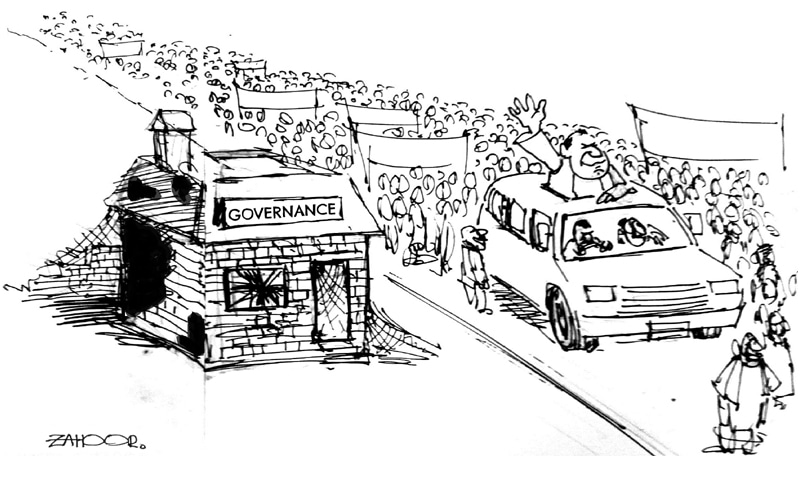
Zahoor&#39;s Cartoon
"گڈ گورننس"
نواز شریف حکومت "گڈ گورننس" کے بلند و بانگ دعو ے کرتے نہیں تھکتی اور اس بات پر ہمیشہ زور دیتی رہی ہے کہ یہی گورننس ہے جو انہیں دوسری جماعتوں کی حکومتوں سے ممتاز کرتی ہے مگ؛
1. کیا بجلی کے شعبے میں سرکلر ڈیبٹ کا 800 ارب ہو جانا " گڈ گورننس " ہے؟
2. پاکستان کے تجارتی خسارہ کا 30 ارب ڈالر سے زائد تک جا پہنچنا " گڈ گورننس " ہے؟
3.غیر ملکی قرضہ جات کا 80 ارب ڈالر کے قریب پہنچ جانا " گڈ گورننس " ہے؟
4. بجلی کی پیداوار کے ناکام منصوبے اور اگست کے مہینے میں ملک میں بد ترین لوڈ شیڈنگ " گڈ گورننس " ہے؟
5. تاجروں کی حمایت کھو دینے کے خوف سے براہ راست ٹیکس وصولی میں ناکامی کے بعد عوام پربالواسطہ ٹیکسز کا بوجھ ڈالنا " گڈ گورننس " ہے؟
6. 40 فیصد عوام کا خط غربت کی سطح سے نیچے زندگی گزارنا اور ان کے حالات بدلنے کے لئے کوئی جامع منصوبہ نہ ہونا ،" گڈ گورننس " ہے؟
7. تمام تر اخراجات، بیرونی امداد اور منصوبوں کے باوجود اسکولوں میں " نیٹ ان رول منٹ ریٹ" میں کمی بھی شاید " گڈ گورننس " ہے؟
8.پاکستان پانی کی کمی کا شکار ہونے والے ممالک کی فہرست میں شامل ہونے جا رہا ہے ، اس حوالے سے کسی ایک بھی جامع منصوبہ کا آغاز نہ ہونابھی " گڈ گورننس " ہی ہے؟
9.کیا ہمارے لئے یہ سوال اٹھانا زیادہ اہم نہیں کہ سی پیک معاہدہ کی شرائط کیا ہیں اور چین کو منصوبے سے پہلے اور بعد کیا مراعات دی گئی ہیں؟
10.شاید ہمارے ملک میں نہ کسی نے سری لنکا کو قرضہ دے کر اس کی پورٹ پر چینی قبضے کی کہانی پڑھی ہے اور نہ ہی کسی کو اس میں دلچسپی ہے۔
11. اس ملک میں ہمارے بچوں کا مستقبل پانی کے بغیر کیا ہو گا اس سے بھی ہمارا کوئی تعلق نہیں-
ان سوالات کا تعلق براہ راست پاکستان کے مستقبل سے ہے۔ میں حیران ہوں کہ پی ٹی آئی جیسی جماعت بھی جو بھرپور اپوزیشن کا دعویٰ کرتی ہے، ان معاملات پر نہ تو سنجیدگی سے سوالات اٹھاتی ہے اور نہ ہی حقائق کو پاناما کیس جتنےزور و شور سے عوام کے سامنے پیش کرنے کی کوئی کوشش کرتی ہے۔ ۔
(افتخار احمد , شطرنج، مہرے اور تماشائی،اقتباس  ، jang.com.pk , August 12, 2017)
..........................................................
گڈ گورننس


گڈ گورننس کا فقدان ہمارے ملک کا ایک اہم ترین مسئلہ بن چکا ہے لیکن اس مسئلے کو اب بھی سنجیدگی سے نہیں لیا جارہا ہے، حالانکہ اس مسئلے سے دیگر اہم مسائل بھی جنم لے رہے ہیں، مثلاً آج کل ذرایع ابلاغ پر نمایاں ترین مسئلے یعنی سندھ میں رینجرز کے اختیارات کے مسئلے کا تعلق بھی اس سے ہے۔
اگر سندھ میں گڈ گورننس ہوتی تو پھر یہاں کسی بڑے آپریشن اور رینجرز کے بلانے کی ضرورت بھی نہیں رہتی۔ پاکستان ہو، اس کا کوئی صوبہ ہو یا کہ کسی صوبے کا کوئی ادارہ ہو، تمام جگہوں پر گڈ گورننس تقریباً ختم ہوچکی ہے۔ ہمارے وزیراعظم غریبوں کے علاج کے لیے کارڈ اسکیم کا اعلان کررہے ہیں۔ یقیناً یہ اچھی بات ہوگی مگر سرکاری اسپتالوں میں گڈ گورننس کب قائم ہوگی؟ وہ کب حقیقی معنوں میں فعال ہوں گے؟ کیا ہم نے کبھی غور کیا کہ آخر گڈ گورننس کی راہ میں کیا رکاوٹ ہے؟ اور اس مسئلے کا حل کیا ہے؟ یہ کوئی راکٹ سائنس نہیں، اس کا سیدھا سادہ سا حل ہے، آئیے اس پر غور کریں۔
سب سے پہلے کسی بھی ادارے کے سربراہ کا انتخاب میرٹ پر کیا جائے، نہ کہ سیاسی تعلق کی بنیاد پر یا پھر محض نوازنے کے لیے۔ نوازنے کے لیے کوئی اور طریقہ دریافت کیا جائے بجائے کسی قسم کی وزارت یا کسی ادارے کی سربراہی سونپنے کے۔ یہ بات تو کوئی راز ہی نہیں ہے کہ نوازنے کے لیے دی جانے والی ذمے داری سے ہر بڑا آدمی صرف ’’کمانے‘‘ کا کام کرتا ہے، نہ کہ اپنی ذمے داری کو ایمانداری سے نبھانے کی کوشش کرتا ہے۔ یہ کام خاصا مشکل ضرور ہے مگر ناممکن تو نہیں۔

یہ سوال بڑا اہم ہے کہ آخر ہماری حکمراں جماعتوں کو اپنی وزارتوں اور کسی بھی ادارے کے سربراہ کی تقرری کے وقت خود اپنی ہی جماعت میں کوئی باصلاحیت اور ایماندار آدمی کیوں نہیں ملتا؟ اور اگر نہیں ملتا تو کیا کوئی غیر جانبدار شخص بھی نہیں ملتا؟ زیادہ دور کی بات نہیں پچھلی حکومت میں ریلوے کے پورے نظام کو تلپٹ کرکے رکھ دیا گیا تھا، لیکن آج ایک صحیح شخص کے انتخاب نے ریلوے کو پاکستان سے نہ صرف ختم ہونے سے بچایا بلکہ اب یہ ادارہ مزید ترقی اور بہتری کی جانب گامزن ہے (یہاں راقم بحیثیت ایک پاکستانی سعد رفیق اور ن لیگ کو شاباش کہنا چاہے گا کہ انھوں نے ایک بہترین فیصلہ کیا اور پھر عمل بھی کرکے دکھایا)۔
گڈ گورننس قائم رکھنے میں نیب جیسے ادارے اہم کردار ادا کرسکتے ہیں اور اس کا طریقہ نہایت آسان ہے مگر مشکل بھی۔ آسان اس طرح ہے کہ اس قسم کے ادارے اگر نیک نیتی کے ساتھ صرف اور صرف کسی بھی ادارے کے سربراہ کی مکمل چھان بین کریں کہ وہ ٹیکس کتنا دیتا ہے؟ اس کے اخراجات کیا ہیں؟ اور گزشتہ دس برسوں میں اس کے اثاثے کیا تھے اور اب کیا ہیں؟ اگر تمام اداروں کے سربراہوں کی اس طرح چھان پھٹک کرلی جائے اور بلاتفریق عدالت کے کٹہرے میں لے آیا جائے تو کسی ادارے کے سربراہ کے لیے یہ آسان نہ ہوگا کہ وہ کرپشن کرسکے۔ درحقیقت کرپشن ہی کسی بھی ادارے کو خراب گورننس اور تباہی کی طرف لے جاتی ہے۔ جن اداروں کے سربراہ کرپشن میں ملوث نہ ہوں وہ ادارے ہی ترقی کی طرف گامزن ہوتے ہیں۔
اگر سربراہ ہی کرپٹ ہوجائے تو ظاہر ہے کہ نیچے کا عملہ بھی بہتی گنگا میں ہاتھ دھوتا ہے، جس سے گڈ گورننس تو ایک طرف، ادارہ ہی تباہی کے دہانے پر پہنچ جاتا ہے۔ یہاں ڈاکٹر عبدالوہاب کا تذکرہ بے محل نہ ہوگا، جس وقت جامعہ کراچی میں دوران امتحان نقل کا کلچر زور پکڑ گیا تھا اور گڈ گورننس بری طرح متاثر ہورہی تھی، ڈاکٹر عبدالوہاب نے سختی کے ساتھ نظم وضبط کو قائم کیا اور بہت سی خرابیوں کو جڑ سے اکھاڑ پھینکا، نقل کا کلچر جڑ سے ختم کرادیا، نیز جامعہ میں ایوننگ پروگرام شروع کرایا، آج جامعہ کراچی کے اسٹاف کو تنخواہوں کی ادائیگی ہورہی ہے تو اس ایوننگ پروگرام سے حاصل ہونے والی آمدنی سے، ورنہ تو یہاں کے اساتذہ بھی پاکستان اسٹیل ملز کے ملازمین کی طرح مہینوں مہینوں تنخواہوں سے محروم رہتے۔
کچھ ہی عرصے پہلے ایک اخبار میں یہ خبر شایع ہوئی کہ سندھ میں ایماندار افسران کی کمی ہے، ایک ایک افسر کو کئی کئی ذمے داریاں سونپی جارہی ہیں کیونکہ کرپٹ افسران کسی کارروائی کے خوف سے ملک سے جاچکے ہیں یا جارہے ہیں۔ یہ خبر عیاں کر رہی ہے کہ اس صوبے میں کرپشن کی کیا صورتحال ہے اور گڈ گورننس کس سطح پر ہے۔
مرض کو ابتدائی مرحلے میں توجہ نہ دی جائے تو پھر بڑا آپریشن ناگزیر ہوجاتا ہے۔ سندھ میں آپریشن کا بھی یہی معاملہ ہے، گو قانونی لحاظ سے سندھ حکومت کا موقف اپنی جگہ درست ہے مگر اس حکومت کے ذمے داروں کو یہ سوچنا تو چاہیے کہ عوامی آواز خود یہ محسوس کررہی تھی، اور آج بھی کررہی ہے کہ یہاں کے مرض کا علاج اب بڑا آپریشن ہی ہے۔ کرنے کا کام تو یہ ہے کہ مرض کو دور کرنے کے لیے صوبائی حکومت خود سے بڑا آپریشن کرکے یہاں گڈ گورننس قائم کرے۔
گڈ گورننس کا ایک اور اہم اور بڑا پہلو انصاف کی فراہمی ہے۔ راقم نے ایک بڑے سرکاری افسر سے پوچھا کہ آپ ایماندار افسر ہیں، آپ کوئی بڑا کردار ادا کیوں نہیں کرتے؟ ان کا جواب تھا کہ وہ اپنے طور پر تو یہ کردار ادا کررہے ہیں لیکن ان کی پشت پر کوئی بھی نہیں، ان کا تعلق کسی بھی جماعت یا گروہ سے نہیں، ایسے میں کوئی بڑا کلمہ حق کہنا بہت مشکل ہے، ہاں اگر ہماری عدالتیں اس قدر مضبوط ہوجائیں کہ عوام کا اعتماد ان پر بحال ہوجائے تو ایک میں کیا نہ جانے کتنے ایماندار افسران سر دھڑ کی بازی لگا کر اپنا کردار نبھائیں اور محاذ پر ڈٹ جائیں۔ بلاشبہ انصاف کی فراہمی بھی گڈ گورننس میں ایک اہم کردار ادا کرتی ہے۔
آج راقم سمیت بہت سے لوگوں کے دن رات کا مشاہدہ ہے کہ مختلف اداروں میں جو ایسوسی ایشنز یا یونینز اپنے ادارے کے ملازمین کو حقوق دلوانے کے لیے بنتی ہیں، وہ خود ہی اپنے ملازمین کا سب سے بڑا استحصال کرتی ہیں اور محض اپنے پسندیدہ ملازمین کے کام کرواتی ہیں اور انتظامیہ پر دباؤ ڈال کر غیر قانونی کام کروا کر اپنے بینک بیلنس بناتی ہیں۔
یوں جن تنظیموں کا کام لوگوں کو ان کے حقوق دلوانا ہوتا ہے، ظلم و ناانصافی ختم کرنا ہوتا ہے اور ادارے میں گڈ گورننس قائم کرنا ہوتا ہے ان کی جانب سے خود قانون کی دھجیاں اڑائی جاتی ہیں اور گڈ گورننس کو تباہ کرنے میں کوئی کسر نہیں چھوڑی جاتی۔ ظاہر ہے کہ جب گڈ گورننس کو قائم کرنے کے لیے دباؤ ڈالنے والے الٹا گڈ گورننس ختم کرنے کے لیے دباؤ ڈالیں گے تو پھر ادارے کی انتظامیہ بھی ان کے غیر قانونی کام کرنے کے بعد شتر بے مہار بن جاتی ہے اور ادارے کو ذاتی فوائد حاصل کرنے کے لیے کھل کر نقصان پہنچاتی ہے، کیونکہ اسے پتہ ہوتا ہے کہ اب اسے کوئی روک ٹوک کرنے والا نہیں اور اگر کوئی ہوگا بھی تو اس سے یہ ملازمین کے حقوق دلوانے کے دعویدار خود ہی نمٹ لیں گے۔
راقم کے ایک دوست کا کہنا ہے کہ انصاف اور احتساب وہی کرسکتا ہے جس کا دامن صاف ہو، جب تک قانون نافذ کرنے والے اور انصاف فراہم کرنے والے اداروں میں ایسے لوگوں کی کثرت نہیں ہوجاتی، گڈ گورننس کا قیام آسان نہیں۔ راقم کا خیال ہے کہ ایسے افراد کی ضرورت تو ہر ادارے میں ہے۔ آئیے پہلے اپنا دامن صاف کرنے کی کو شش کریں اور کچھ دیر اس پہلو پر بھی غور کریں۔

......................................................
Image result for ‫گڈ گورننس کیا ہے‬‎

Crisis of Good Governance

nation.com.pk

Governance is the exercise of authority to address public affairs. This authority can be political, economic or administrative. The use of this authority is always based upon certain rules and laws of society established by its members. Good governance is to run administration according to these defined laws for the welfare of the people. Bad governance means digression or subversion from these laws. Good governance guarantees safety and security of the people and creates an atmosphere conducive to progress and prosperity. Bad governance begets a number of social crises. 

Good governance comes through strong and independent institutions of the state. These institutions need to be built, sustained and stronger than individuals. Unfortunately, a little effort has been made to build institutions on a stable footing in Pakistan since independence and individuals have taken precedence over institutions. Pakistan suffers from a number of crises but the crisis of good governance is on top because it is the core of all other problems. 
Our country is suffering from weak institutional set-up, political instability, rampant corruption, lack of accountability and transparency and bad law and order situation. All these issues have seriously pushed off the country to an abysmal state of poor governance. 

Every government looks down upon the policies of the previous government, throws those away and establishes new ones. Due to bad governance education, health, civic services, agricultural infrastructure are all in bad state. Even the most basic social needs of citizens are not fulfilled. Law and ordered situation is deteriorating and people are being robbed and killed in bright day light. People don’t feel safe and secure. 
Places of worship have to be guarded for the fear of terrorism. This sorry state of law and order scare the investors away from the country thereby severely harming the economy. 
One of the most damaging effects of bad governance is the prevalence of corruption that ultimately results in lawlessness and the biggest hindrance in the way of development. The absence of impartial and independent accountability has resulted in the growth of this monster. It has become a norm in our society rather than an exception. 

Good Governance stands for poverty alleviation. 
It has always been a favourite buzzword in our economic and social development circles. 
Almost every democratic government has launched poverty reduction programs but all proved futile and ended in corruption. Accountability is a crucial point in good governance – the rulers and the institutions of the state are accountable to people. But, it is very hard to find it in Pakistan’s weak institutional set-up. 

Merit or fairness is essential for good governance and the both support each other. But in our country merit is given least importance. Nepotism and favouritism are the order of the day. Our once very strong institutions like PIA, Pakistan Railway, Pakistan Steel etc. are now in state of paralyse.  All the cities in any province is not getting equal share of development. 
Developing one city in any province at the cost of basic facilities, like hospitals, schools and colleges, clean drinking water etc. , of the other cities is another example of bad governance. One city gets the road network, underpasses and overhead bridges and the others don’t have the basic road network. This disparity has created bad feelings among people living in small cities. 
Similarly, unemployment, illiteracy are other aspects which speak volume about sorry state of governance. People at the helm of affairs need to understand that good governance is more than mere management.  It is not only about decision making, policy formulating but also priority settings, implementation and getting results. Transparency, legitimacy, merit and the rule of law are the important pillars of good governance. 
Politicians and other state officials in the power corridor make illegal appointments in various public offices. They could appoint inept people without merit on political grounds, for the sake of money, favouritism and nepotism. 

The civil servants, police and NAB are not fully autonomous in their decree to work. All are under severe political pressure. None of them is granted full independence, to bring the criminals to justice and inquire the cases of big guns. These are powerful institutions, which need considerable attention to de-politicise their structures. These institutions should be given absolute autonomy to bring the corrupt people before the law. 

Good governance is a prerequisite for social harmony, public order, political stability, economic prosperity and certainty about future. It delivers the fruit of progress and development evenly to all and sundry. Good governance is required at all levels of society and state. Government needs to focus seriously on this issue to accomplish satisfactory results. We must not allow the erosion of institutions through the idiosyncratic behaviour of rulers. No state is free of all crises but it is the quality of governance that ensures its survival through any crisis. 

Rauf  A Khattak , The writer is based in Lahore. 
http://nation.com.pk/columns/05-Mar-2017/crisis-of-good-governance

.
~ ~ ~ ~ ~ ~ ~ ~ ~ ~ ~ ~ ~ ~ ~ ~ ~  ~ ~ ~  ~


~ ~ ~ ~ ~ ~ ~ ~~ ~ ~ ~ ~ ~  ~ ~ ~  ~
Humanity, Knowledge, Religion, Culture, Tolerance, Peace
انسانیت ، علم ، اسلام ،معاشرہ ، برداشت ، سلامتی 
Books, Articles, Blogs, Magazines,  Videos, Social Media
بلاگز، ویب سائٹس،سوشل میڈیا، میگزین، ویڈیوز,کتب
سلام فورم نیٹ ورک  Peace Forum Network 
Join Millions of visitors: لاکھوں وزٹرز میں شامل ہوں 
Salaamforum.blogspot.com 
سوشل میڈیا پر جوائین کریں یا اپنا نام ، موبائل نمر923004443470+ پر"وہٹس اپپ"یا SMS کریں   
Join 'Peace-Forum' at Social Media, WhatsApp/SMS Name,Cell#at +923004443470
     
  
Facebook: fb.me/AftabKhan.page

Has anything changed under the PML-N?

Image result for mega projects in lahore
کیا نون لیگ کے چکاچوند منصوبے ترقی کی علامت ہیں؟
To answer the question posed in the headline, yes, there are changes, both good and bad, but mostly bad. With so much borrowing from national and international resources and a great deal of material and political interest in shiny projects with great visibility, like the metro bus, no one is spared the visuals. Undoubtedly, people will use public transport — it is convenient and cheap. Having an urban public transport system, however, is not the issue under question — we needed it, and will have to expand and build more rapidly than ever before. The issue is regarding which mode of transportation is sustainable, when work on it should be initiated and where.

For countries at the lower stage of economic development and productivity, like Pakistan, the model based on ‘import everything’ — when you are unable to pay for these imports considering the small export base — is not the right one. Except for the steel and gravel, nothing is ‘made in Pakistan’. The more intriguing part of the scheme is the ‘taxi-based’ payment to the Turkish company, meaning the government would pay for every seat, whether it is occupied or vacant, and would further subsidise the cost to make it attractive for commuters.

My point is, we are still far from reaching that stage and with a government at the helm that has a long history of surrendering to organised business interests, symbolised by the tax amnesty scheme, low tax rates, the widening gap between revenues and spending and giving more subsidies in the name of ‘the poor’, schemes like the Metro bus make little sense.
[Pakistan’s trade deficit amounts to $11.92 billion]

Isn’t it a joke that the country continues to beg from foreign countries, while those sections of society that are affluent, make big money and pay little or no taxes. Instead of netting tax cheats, the government makes laws to legalise their black monies. This has been done several times without there being any visible effect on broadening the tax base. This is a failed strategy of weak leaders, a visionless government and ineffective state institutions.

Another favourite project of the Sharif dynasty is distributing free laptops to students doing well in some examinations to “promote technology”. Is that the route advanced or developing countries have taken to develop information technology? Actually, in some schools in Punjab, I was amazed to see rows of computers in the labs. There is a lot of hardware on display without there being the software or skills to use them. The objective in every major development strategy of the Sharifs seems to be to create some political mileage, show ‘results’ and make people believe that the Sharif dynasty can do better than the Bhutto dynasty. The hired guns in the media and political mouthpieces with lots of connections and power to make illegal money, endlessly defend the dynasties, and when in the presence of chief oligarchs, indulge in flattery. Their mantra seems to be that ‘all is well and you are doing great work for the country’. This is an old song the professional flatterers have always sung.

You cannot escape all the loud announcements, with there being millions of rupees worth of advertisements in newspapers of mega projects that talk about ‘corridors’ and power plants. My humble submission is, how many of these mega projects have been initiated through our own national resources; are they clean, sustainable and economical; can they make Pakistan competitive? The answers to these questions will not paint a pretty picture.

The world is moving fast towards green technologies. That is where the future of mankind and the planet lies, while our ruling dynasties continue to look for softer, faster, expensive and unsustainable options. Mark my words — this government will leave the country in higher national debt than any other government in our history. This is because it neither has the credibility nor the competence to harness national resources.

Our failed model of populist politics offers no solution for complex national problems. The rulers lack the courage and wisdom to address foundational issues like education, health, governance, justice, energy and population growth.

By Rasul Bakhsh Rais: http://tribune.com.pk/story/1026365/has-anything-changed-under-the-pml-n/
Image result for mega projects in lahore
کیا نون لیگ کے چکاچوند منصوبے ترقی کی علامت ہیں؟

یقینا ، بہت سی تبدیلیاں آئی ہیں۔ ان میں اچھی بھی ہیں اور بری بھی،لیکن کہنا پڑے گا کہ بری زیادہ ہیں۔ حکمران ملکی اور غیر ملکی اداروں سے بھاری قرضہ جات لیتے اور صحت ِعامہ اور تعلیمی منصوبوں کی بجائے چکاچوند منصوبے ،جیسا کہ میٹرو، بناتے ہوئے اپنے سیاسی وسائل کو تقویت دینے کی فکر میں ہیں۔ چونکہ یہ منصوبے واضح طور پر دکھائی دیتے ہیں اور عوام کو تاثر ملتا ہے کہ ملک میں بہت کام ہورہا ہے، لہٰذا ایسے منصوبے انتخابی کامیابی کا باعث بنتے ہیں۔ یہ بیانیہ آگے بڑھانا بھی آسان ہوتا ہے کہ عوام کو سفری سہولیات چاہییں۔ اس میں دو آراء نہیں ہوسکتیں کہ شہری علاقوں میں عوام کو سستی سفری سہولت درکار ہوتی ہے اور بڑھتی ہوئی آبادی کے تناسب اس میں اضافہ بھی ہونا چاہیے ،لیکن سوال یہ پیدا ہوتا ہے کہ ہمارے جیسے ملک میں کس قسم کی سفری سہولیات کی ضرورت ہے۔ یہ سوال بھی اپنی جگہ پر موجود کہ کیا اتنے مہنگے منصوبے بنا نا اور میٹرو اور اورنج ٹرین اور اس طرح کے دیگر منصوبوں کو سبسڈی دے کر مستقبل بنیادوں پر چلانا اور ان کے معیار کو برقرار رکھنا ممکن ہے یا نہیں؟
دنیا کے دیگر ممالک کا جائزہ ظاہر کرتا ہے کہ پاکستان جیسے کم درجے کی ترقی اور پیدا واری صلاحیت رکھنے والے ممالک ، جن کی برآمدات کم اور درآمدی بل زیادہ ہو، آپ اتنے مہنگے منصوبے بنانے کے متحمل نہیں ہوسکتے۔ خاص طور پر اُس صورت میں تو ہرگز نہیں جب آپ بھاری غیر ملکی قرضوں تلے پہلے ہی دبے ہوئے ہوں۔ ان مہنگے سفری منصوبوں میں استعمال ہونے والے سٹیل اور پتھر کے علاوہ کچھ بھی ملکی سطح پر تیار نہیںہوتا ۔ اس منصوبے میں ترک کمپنی کے ساتھ''ٹیکسی کرائے‘‘ کی طرز پر رقم کی ادائیگی کی شرط ہے ۔ اس کا مطلب ہے کہ حکومت کو اس کی ہر نشست کا کرایہ ادا کرنا پڑے گا چاہے اس پر کوئی مسافر سفر کرے یا نہ کرے۔ اس کا مطلب ہے کہ اس کا بوجھ پر ٹیکس دہندگان پر پڑے گا یا کرائے میں اضافے کی صورت میں دیگر مسافروں پر۔ 
میرا موقف یہ ہے کہ ابھی ہم اس قابل نہیں ہوئے کہ یہ حکومت، جو کاروباری طبقے کی ناراضی سے ڈر کر اُس کے سامنے ہتھیار ڈالتے ہوئے ٹیکس میں چھوٹ دینے کی طویل تاریخ رکھتی ہے ، غریب مسافروں کو سہولت دینے کے لیے مزید سبسڈی دے۔ پہلے ہی ٹیکس کی کم شرح کی وجہ سے محصولات اوراخراجات میں فرق بڑھتا جارہا ہے۔ کیا یہ مذاق نہیں کہ یہ ملک غیر ملکی ذرائع سے رقم مانگ کرگزارہ کرتا ہے جبکہ اس کے معاشرے کے بہت سے دھڑے بے حد دولت مندہیں لیکن وہ ان سے ٹیکس وصول نہیں کرپاتا۔ٹیکس چوروں کو پکڑنے کی بجائے حکومت طاقتور حلقوں کے کالے دھن کو سفید بنانے کا موقع دینے کے لیے قوانین بنارہی ہے۔ اس نے پہلے بھی بارہار ٹیکس ایمنسٹی کی سکیمیں متعارف کرائی ہیں لیکن ان سے ٹیکس کے دائرے میں کبھی اضافہ دکھائی نہیں دیا۔ دراصل یہ کمزور حکمرانوں کی ناکام حکمت عملی ہوتی ہے جب وہ طاقتور حلقوں کو خوش کرتے ہوئے امید رکھتے ہیں کہ وہ کبھی رضا کارانہ طور پر ریاست کی طرف اپنے فرائض ادا کرنے کے لیے تیار ہوجائیں گے۔اگر انسان واقعی اتنے ''مہذب ‘‘ ہوں پھر ریاست قائم کرنے اور قوانین اور سکیورٹی ادارے بنانے کی ضرورت باقی نہ رہے۔ 
نواز شریف حکومت کا ایک اور پسندیدہ منصوبہ امتحانات میں اچھی کارکردگی دکھانے والے طلبہ کو مفت لیپ ٹاپ دینے کی سکیم تھی۔ ہمیں بتایا کہ اس کا مقصد ''جدید ٹیکنالوجی کا فروغ‘‘ ہے۔ کیا دنیا کے کسی اور ملک نے بھی ٹیکنالوجی کو ترقی دینے کے لیے ایسا قدم اٹھایا ؟ میں نے پنجاب کے سکولوں میں کیے گئے دوروں کے دوران بہت سے سکولوں میں قطار درقطار ، بے شمار کمپیوٹر دیکھے ہیں لیکن طلبہ نہ اُن کی مہارت رکھتے ہیں اور نہ ہی اُنہیں جدید علوم سے آگاہی ہے۔ کیا ہم یہ سمجھتے ہیں کہ میز پر کمپیوٹر کی موجودگی ''صارف‘‘ کو جدید علوم، جیسا کہ ریاضی، فزکس، کیمیا، انگریزی وغیرہ کا عالم بنا دیتی ہے؟ہمارے ملک کا اصل مسئلہ اشیا کی فراہمی نہیں ، فکری آبیاری ہے۔ دنیا کی بہت سی اقوام ہم سے بھی کم وسائل رکھتے ہوئے ترقی کے زینے پر چڑھنے میں کامیاب ہوگئی ہیں، لیکن ہم نے انگریزی محاورے کے مطابق گھوڑے کے آگے تانگہ باندھ رکھا ہے۔دراصل موجودہ حکمرانوں کی ہر سکیم کا مقصد سیاسی فائدہ حاصل کرنا ہے۔ ایک لڑکے کو جدید علوم حاصل کرنے اور اپنے ذہن کو جلا بخشنے میں وقت لگے گا لیکن اُس کے ہاتھ میں لیپ ٹاپ فوراً تھمادیا جاتا ہے۔ جب ایسی سکیمیں انتخابی نتائج میں ڈھلتی ہیں تو لوگ یہ سمجھتے ہیں کہ نواز شریف حکومت بھٹو خاندان سے سیاسی مقبولیت میں کہیں بڑھ کر ہے ۔ کہاجاتا ہے کہ عوام نے ووٹ کی طاقت سے ناقص کاکردگی دکھانے والی حکومت کو گھر کی راہ دکھا دی۔ اس کے علاوہ میڈیا میں موجود حکومت کے جوشیلے ترجمان موروثی سیاست کی حمایت میں مختلف تاویلیں پیش کرتے نہیں تھکتے۔ خوشامدی ٹولوں کے سہانے گیت ہی ان حکمرانوں کی کارکردگی کا بہترین اظہار ہیں۔ 
اس میں کوئی شک نہیں کہ اخبارات اور ٹی وی پر لاکھوں روپوں کے پرکشش اشتہارات کا فائدہ تو ہوتا ہے۔ تاہم دیکھنے کی بات یہ ہے کہ ان تشہیر کردہ منصوبوں میں سے کتنے شفاف طریقے سے مکمل ہوکر عوام کو فائدہ پہنچا رہے ہیں یا پہنچائیں گے؟ فی الحال ایسا کچھ دکھائی نہیں دیتا۔ جس دوران دنیا گرین ٹیکنالوجی کے نئے افق تلاش کررہی ہے تاکہ اس سیارے اور اس میں رہنے والوں کے لیے ماحول کو صاف ستھرا رکھا جاسکے، ہمارے موروثی سیاست دان اپنے وقتی فائدے لیے ریاست کے وسائل اجاڑ رہے ہیں۔ ہماری ہر حکومت آنے والی حکومت کے لیے ملک کو مزید مقروض چھوڑ کرجاتی ہے لیکن یہ موجودہ حکومت سابق تمام ریکارڈ توڑنے پر تلی ہوئی ہے۔ اس وقت مقبولیت حاصل کرنے کے لیے بنائے جانے والے منصوبے ہمارے سب سے بڑے مسائل ہیں۔ ہمارے حکمران تعلیم ، صحت، انصاف، توانائی اور بڑھتی ہوئی آبادی کو روکنے کے لیے کوئی منصوبہ نہیں رکھتے کیونکہ ان میں مطلوبہ 'کشش‘ کی کمی ہے۔ افسوس، کتابیں چاندی کی نہیں ، چمک سے محروم صفحات کی بنتی ہیں۔ 
Source:: http://dunya.com.pk/index.php/author/rasool-baksh/2016-01-13/13996/60194994#tab

Related:
~ ~ ~ ~ ~ ~ ~ ~ ~ ~ ~ ~ ~ ~ ~ ~ ~  ~ ~ ~  ~
Humanity, Religion, Culture, Science, Peace
 A Project of 
Peace Forum Network
Peace Forum Network Mags
Books, Articles, Blogs, Magazines,  Videos, Social Media
Overall 2 Million visits/hits