Featured Post

FrontPage صفحہ اول

Salaam Pakistan  is one of projects of  "SalaamOne Network" , to provide information and intellectual resource with a view to...

What kind of democracy?


AFTER years of living dangerously we seem to be finally losing control of ourselves and risking a veritable failure. The causes are both external and internal but the remedy has to be internal.

Given the resourcefulness of our people and multiple underlying strengths this is achievable; only if we try to understand and resolve the complexity of our challenges.

Most importantly we need to understand our system we call democracy. A democratic society organises itself in a way that it is anchored in a strong rule of law and provides to its citizens a level playing field and equal opportunity, promises a measure of economic and social justice, and tries to protect the weak and the vulnerable, and minorities — religious, sectarian, ethnic and regional. And its social structure, power balances, quality of leadership, people’s habits of mind and political culture are adapted to serve these ends.

Democracy’s core idea is power — where it should reside and how it should be used and to what purpose. A democratic system believes power resides in those who delegate it to their representatives as a trust so that it can be exercised to look after them and respond to their aspirations for justice, human security and quality of life, individual and collective. Democracy thus is focused on people, their well-being, happiness and self-fulfilment. It is all about substance. And it takes time to be a fully functional and mature democracy.

If society is not organised along these lines you can have as good an appearance as possible and as many elections as you want but it will not be a democracy and may never become so. It will remain something else, an imposter perhaps, in which case political power will keep empowering the dominant social groups who have a vested interest in a deformed political process that allows them to sideline the people and take turns in ruling the country for their personal, class and institutional interests.

They monopolise the state resources which are denied to the people.

Sadly, this has been the story of Pakistan. Democracy or army rule, power has been taken away from the people but not transferred back to them. The system is built to recycle power back into the hands of the already empowered alternating between civilians and the army, and within the civilians, from one set of politicians to another.

Yes we have something now that looks like democracy but in fact does not work like it. This mirage of democracy sabotages our understanding causing a confused debate, as some would say democracy in Pakistan has failed while others applaud free media, emerging civil society and flashes of judicial activism as signs that democracy is alive and well.

Both are wrong as are those arguing that it is the governance that has failed not democracy, not realising that in a modern democracy governance must reflect, to varying degrees, democratic values and principles.

What has failed in Pakistan is essentially a system whose form and rhetoric is democratic but whose substance is reactionary.

It needs to be changed. Media and civil society can help but they are merely facilitators or stimuli, not drivers of change. That can only come from political action. The good news is we have great strengths that could enable us to succeed; but the bad news is we also have great weaknesses that are increasing and causing us to fail, like the unresolved issues of identity, religion, security and widening fault lines, not to mention the existential threats we have come to face since 9/11. Pakistan is literally under siege, at its own hands and at the hands of others.

If just the ruling elite had failed and Pakistan only faced external dangers, its problems would not be so daunting. Thanks to the abysmal failure of the elite, people also have become part of the problem. Unfortunately, such is the power of their despair that anything other than the current system has come to have a fatal attraction. People are caught between the devil and the deep blue sea. On one hand are demagogues exploiting a great religion, who in a political vacuum are the only mediators available to the people. And on the other is the intelligentsia, much of it confused and conflicted, part fed by xenophobia and negativity, and part by twin illusions, that with a free media and the army in the barracks democracy has arrived and will solve all our problems.

So we have two overlapping slogans — one so-called Islamic and ultra nationalistic, and the other, supposedly secular/liberal, ‘give democracy a chance’. To say ‘let democracy however imperfect continue’ is naïve. If democracy in Pakistan was just imperfect there would be hope. It is deformed. And they require dismantling and rebuilding. Can it be done? Yes but not the way we are going about it. We do not realise that the system has weakened our strengths and exaggerated our weaknesses.

And we stand at the crossroads. At issue is not just democracy’s future but our own.

The system has failed and its repetition will not salvage us. Democracy that we want to persist with is not the democracy that can save us. We must not confuse democracy as practised by us and democracy as the concept. The first is failing us and the second can save us. ‘Democracy is dead; long live democracy’.

By Touqir Hussain ;The writer, a former ambassador, teaches at Georgetown and Johns Hopkins University.http://www.dawn.com/2011/10/16/what-kind-of-democracy.html

READ>>>> Present political arrangements  is trash left by military dictatorship. Elections-2008 were aimed to continue with the puppet rule under US patronage. How elections held with 35 million fake voters [45% of registered voters] can result in democratic government? So what we see now is jus an illusion of democracy... some reforms are suggested... read >>>http://t.co/nWDNNWN


Stable Pakistan not in India's interest


Many conveniently propose the myth that a stable Pakistan is in India’s interest. This is a false proposition. The truth is that Pakistan is bad news for the Indian Union since 1947-stable or otherwise........... The self-destructive path that Islamabad chose will either splinter the state into many parts or it will wither away-a case of natural progression to its logical conclusion..............With China’s one arm, i.e. Pakistan disabled, its expansionist plans will receive a severe jolt.

Pakistan’s breakup will be a major setback to the Jihad Factory, as the core of this is located in Pakistan, and functions with the help of its army and the ISI. This in turn will ease pressures on India and the international community........

With disintegration of ISI’s inimical activities of infiltration and pushing of fake currency into India, from Nepal and Bangladesh will cease....... Read full article by Bharat Verma in "Indian Defence Review" ....CLICK >>> http://goo.gl/aGNvv

WAKEUP PAKISTAN........


MFN status to India

REPORTS had been trickling down for months about possibility of Pakistan granting the coveted status of ‘Most Favoured Nation’ (MFN) to India but Foreign Minister Hina Rabbani Khar confirmed in the National Assembly on Wednesday that a decision in principle has been taken to accord this status to New Delhi. In fact, the decision was taken during Commerce Minister Makhdoom Amin Fahim’s recent visit to India and it was widely believed that it was a quid pro quo for dropping of India’s objection at WTO to Pakistan’s bid for securing more market access to EU.
Some lobbies had been opposing grant of MFN status to India on two grounds — New Delhi’s obstinacy to move towards resolution of political issues especially the core issue of Jammu and Kashmir and its protectionist attitude as demonstrated in non-tariff barriers that impeded any increase in Pakistani exports to India despite grant of MFN status to Pakistan way back in 1990s. It was believed that in this background the grant of MFN status would not produce any positive result except negative consequences for our own industry. However, as Makhdoom Amin Fahim was accompanied by a representative delegation of the business community during his Indian visit it is obvious that the decision to grant MFN status to India has the backing of the most concerned stakeholders in the process i.e. the businessmen of the country. Otherwise, too it is quite obvious that the move could reap benefits for the country if implemented in a sensible manner to ensure that our industry is not harmed in any way. Increased trade among neighbouring countries is always beneficial because of proximity factors that reduce cost of transportation and cut short the delivery time to the barest minimum. That is why other countries of the world are going for both bilateral as well as regional trading arrangements and this region should not be an exception. It would also prove to be a major confidence building measure but it should lead to the much-needed CBM i.e. resolution of the core issues, which would give a tremendous boost to multi-faceted cooperation between the two countries on a sustainable basis.
http://pakobserver.net/detailnews.asp?id=119681
~~~~~~~~~~~~~~~~~~~
THE respective Pakistani and Indian positions on the most-favoured nation status for each other thus far are a study in contrast. While New Delhi granted Islamabad MFN status some 15 years ago, the way for Pakistanis wanting to do business in India has remained largely blocked because of a number of non-tariff and tariff barriers. Pakistan has been dithering for all these years on reciprocating with an MFN status for India, and has been accused of not following the current economic script as enunciated by the World Trade Organisation. Yet, Islamabad has been giving concessions to imports from India by adding ever-newer items to the positive list of trade items from across Wagah over the years. This sets theory apart from practice. Every country has its own interests to protect. Consequently, it was not entirely unexpected that the Pakistani decision to award MFN status to India would coincide with the preparation of a negative list of items by the commerce ministry in Islamabad. These items will not be allowed to be imported from India to protect domestic interests, such as the all-important textile sector.

Speaking in the National Assembly on Wednesday, Foreign Minister Hina Rabbani Khar sought to de-link the MFN from some other issues between the two uneasy neighbours. She repeated Pakistan`s stance on holding a plebiscite in Kashmir — a humanitarian issue close to Pakistani hearts and one that cannot be reduced to a mere political dispute. But after years of an unfruitful stand-off, a relationship based on mutual economic dependency may inspire new thinking and spawn hitherto unseen solutions.

The Pakistani commerce minister`s recent visit to India after 35 years indicated a readiness to try the alternative to old hostilities. It would be good if officials here drew sufficiently upon the economic trade-off with India as a way of explaining the situation to the general public. It is not that Pakistan is not getting anything of immediate value from the MFN decision. New Delhi is willing to not oppose tariff concessions for Pakistani exporters in the European market that we so desperately crave. This give-and-take is one plausible reason why local businessmen appear to have softened their old position on the MFN for India. However, their mood will be defined by the entries on the negative list that is in the making at the commerce ministry. After all, few Pakistani businessmen ever opposed trade with India per se. Unlike countries, they seldom if ever mixed politics and business. Like countries, they were a bit apprehensive of unbridled business that could hurt their own little interests.


The New Brass on the Block - Next Army Chief ?


The game is on. Not the brash politicking from Raiwind that promises to dismantle the Presidency. Not the unscrupulous ingenuity from the Presidency that has muzzled the MQM back into the fold. Not from the Supreme Court as it tries to throw its weight around in Karachi. And not from Kabul, or New Delhi either, where Hamid Karzai and Manmohan Singh have matured a strategic pact in half the time of a human pregnancy. No, those are all little games.
In Islamabad – correction, Rawalpindi – there is only one game in town. And it’s called the Promotion Game. Up for grabs are stars...preferably four, but three will work too. And if they’re made of brass, then the political alchemy for converting khaki cotton into the armour-plating of power becomes so much more easier.
Here’s the backgrounder: General Ashfaq Kayani is set to retire (for a second time) in November 2013. That’s when his office will be available for occupancy. But till that moment arrives, like any bureaucracy – and the army is Pakistan’s biggest, even most politicised one – the ‘grooming’ and placement of his subordinates is key for the operational efficacy as well as internal dynamism of the institution he commands.
Kayani’s latest move – the promotion of four major generals to the rank of lieutenant general – is a critical indicator of what lies next for Pakistan’s most powerful institution. Who’s going to be Spook-in-Chief (DG-ISI)? Or the guy who keeps all the brass connected (chief of General Staff)? Who’s going to be GHQ’s record-keeper (military secretary)? Or the man who will fight with (or talk to) the Taliban (commander XI Corps)? Which general shall keep the Americans out of Quetta while ensuring Baloch separatists are suppressed (commander XII Corps)? What about the chap who watches the nukes (commander Strategic Forces), or the one who keeps India busy across the LoC (commander X Corps) while keeping his ‘Coup Brigade’ (the ‘111’) oiled and ready? And let’s never, ever forget the next probable for the COAS title.
So let’s war-game what Kayani is thinking. He’s got several immediate (operational/tactical) and a larger (strategic) responsibility pending for keeping his institution loyal and intact; keep fighting Pakistan’s multiple conflicts (which alphabetically and incompletely are: Afghanistan, Balochistan, CIA, drones, economy, Fata, floods, IAEA, India, Kashmir, Karachi) but keep the army reigning supreme. Ambitious as that goal may be, Kayani will need his house to be in order.
Thus, with the latest batch of promotions, the COAS has been conservative and not broken precedent. He has overlooked all the 2-stars from the Corps of Engineers who were due for promotion, preferring to supersede them instead. This decision has worked out politically too, as the leader of the seniority list, Maj-Gen Junaid Rehmat, the DG-NLC, has been the subject of the recent flak attack by Chaudhry Nisar Ali Khan’s Public Accounts Committee. Thus, Kayani has preferred to play it safe: Supporting Arms (like the Engineers, to which Rehmat belongs), are usually given less love at the highest levels, primarily to ensure the elitism of the Fighting Arms. It’s the way the Pak Army has always worked. So, Kayani has played by the rules.
But the resumes of his choice all reflect the political complications of the intra-GHQ chess-match. Vice Chief of General Staff, Maj-Gen (now Lt-Gen.) Nasser Janjua, a former director military operations, was a wise choice. As the most senior fighting-arm representative (from the Punjab Regiment), he was hailed a tactical genius as GOC of the 17th Infantry Division, Kharian (the formation operated in Swat District from the crucial phase of November 2007 to December 2008). Janjua is a thinking soldier, and earned his spurs long before the success of his well-crafted Operation Rah-e-Haq. He’s got the seniority along with all the right postings and battle honours. Kayani promoting him was simply the ‘right thing’ to do, as it covers the meritocratic angle.
However, Janjua has not been dispatched to a new posting yet. That means a coveted office will have to be emptied to accommodate him. Lt-Gen Asif Yasin Malik, who has been leading Peshawar’s XI Corps, might be shifted to GHQ as CGS, a position that incumbent Lt-Gen Waheed Arshad is expected to rotate out of soon, probably for a Corps posting that suits his Armour background. Janjua would be natural fit in Peshawar, and him getting Malik’s office will keep the Pentagon at bay as well, for he has been documented in Washington as a trailblazer in counterinsurgency operations.
Alternatively, Janjua could get ‘groomed’ for a possible 4-star role, which would require him to be operationally familiar with both sides of the border. Thus, his trajectory could replicate that of Lt-Gen Tariq Khan, who’s been appreciated internationally as a war-hero for his work with the Frontier Corps and the 14th Infantry Division. Since his performance in Fata, Khan has been moved east and awarded the India-centric I Corps in Mangla, one of Pakistan’s two “strike” formations. Expect him to be rotated back into GHQ as a Principal Staff Officer for his own run for COAS, as him getting two Corps commands would be rare, even unprecedented. But regardless of the job-matrix, keep your radar on for Malik, Arshad, Khan and Janjua. They’re all among the finalists who could get 4-stars stitched to their shoulders.
Gallantry, however, is not the only qualifier in this game.
Barring those superseded, the newly promoted Lt-Gen Tariq Gilani has been quickly accommodated. Unlike the pending office for Janjua, Gilani’s immediate appointment is an example of Kayani’s ‘continuity’ doctrine. Also at display is the COAS’s ‘safe hands’ approach, for Gilani was stationed as the GOC of the 22nd Division in Sargodha, where he was also responsible for the 47th Artillery Brigade (an original among the few reputedly nuclear-capable formations). Thus, Gilani has been kept ‘within the system’ and placed in charge of the Army Strategic Forces Command: Yes, the nukes – at least some of the land-based delivery systems. In effect, this Gunner (he’s from the relevant Fighting Arm, Artillery) was already in the ‘asset management’ business for the army. His immediate appointment and its announcement is a signal to all: the bombs (some of them, for sure) are in safe, familiar, even academic hands.
But remember that the ASFC is not regarded as a top-tier posting. Gilani will probably not press the red button when things go ballistic, though he will have some of the coordinates to shoot his birds at. Also, his political CV is, internationally, very acceptable, for he is a graduate of US Army War College (where he extensively researched Pak-American military ties) and served as commandant of the Armed Forces War College in Islamabad.
But there is a personal angle to the appointment of Pakistan’s new nuke commander: he is a schoolmate, if not a school-chum, of Kayani himself (both are graduates of Military College Jhelum). However, in case someone shouts nepotism, the COAS can keep those charges down to a minimum, primarily because Gilani does have the credentials.
Kayani’s next two choices have institutional patronage written all over them. Both are ‘young’ major-generals, (from the second batch of 2008) compared to the other two, but both promotions have incredibly different backgrounds.
Artilleryman Lt-Gen Ijaz Chaudhry just served as DG-Rangers in Sindh, where he essentially delivered the message of the army to the civilians: without being granted adequate powers, his forces will just stay put. Just like he made his 14th Infantry Division settle back down in Okara after the hell that was Operation Zalzala, Chaudhry ably secured the operational aim of Karachi’s V Corps think-tank: keep mum, till they beg you to return.
Temporarily sidelined by the chief justice of Pakistan for the Sarfaraz Shah killing scandal, Chaudhry waited in the bullpen till his comeback was easily spun as an ‘at your service’ move when things really went south in the city by the sea. Promoting him is a message in simple soduku from the army to all and sundry: that despite a political showdown with a major branch of government, you can still get 3 stars. Just follow your damn orders.
Also interesting to note is that versus Janjua and Gilani, Chaudhry has made it so far because he carries the ‘Made-by-Kayani’ brand, as the decision for his promotion to 2-star rank was made in 2008, when the first selection board was chaired by a then newly appointment, chain-smoking COAS. To have come this far, despite the complications in Karachi, Chaudhry has probably cost Kayani a few cartons of well-filtered cigarettes. Interestingly, his promotion has not been simultaneously announced with a posting; that means Rawalpindi’s Biggest Gun is still thinking hard about placement. Expect to hear more about Chaudhry, the not-so-lone Ranger.
But the appointment of Lt-Gen Naveed Zaman, currently Chief Instructor B-Division at the National Defence University, requires particular attention. Zaman’s brother-in-law, Brigadier Moeenuddin Ahmad, was killed by assailants in October 2009, who ambushed him along with his driver and guard in Islamabad, attacking their jeep with automatic weapons in broad daylight. A probable cause was that Maj-Gen Zaman was holding a key operational position in Waziristan then, for as GOC of the historic 7th Infantry Division, he was in the midst of launching the critical Operation Rah-e-Nijat that very same month.
If that connection caused the killing, then Zaman’s service and plight didn’t go unnoticed. As an alumnus of Cadet College Hassan Abdal, he enjoys the company of a strong old-boys network in the recent and current GHQ and the JCSC Secretariat: Lt-Gen. Khalid Shameem Wynne (CJCSC), Lt-Gen Masood Aslam (former commander XI Corps), Lt-Gen Shujaat Zamir Dar (just retired POF chairman) and the man who till recently pushed all the files in the right direction, Lt-Gen Mohsin Kamal (MS and former commander X Corps); All those Abdalian connections, along with the COAS who had personally promoted him to 2-stars, helped ensure that Zaman be honoured with a safer but respectable ‘desk-job’ as commandant of the NDU.
As he is a ‘consensus candidate’, representing the fraternity of the army, the announcement of Zaman’s immediate appointment as MS indicates that future selection boards, though chaired by Kayani, will make promotions that carry the distributed weight of the round-table of Pakistan’s khaki knights. So, sizing up Pakistan’s new brass on the block, the COAS’s office politics show that he is increasingly going to make future decisions in a way outgoing generals tend to – or are forced to: as first, among equals.

By Wajahat S Khan, The News. The writer is a former Shorenstein Fellow at the Harvard Kennedy School of Government and a broadcast/online journalist. Email: wajahat _khan@hks.harvard.edu


Shia- Sunni A fearful asymmetry


For various reasons, writing on Pakistan’s internal sectarian conflict is an incredibly sticky proposition. Hence Sectarian War: Pakistan’s Sunni-Shia Violence and Its Links to the Middle East by senior journalist Khaled Ahmed, is a welcome attempt to analyse the causes behind the sectarian strife that has plagued this country.

Referring to the national press, the author observes that “most crucial details relating to sectarianism are either glossed over or are simply not available to a sector that is in the habit of denying sectarianism by ignoring it”.

While perhaps some in the media and among the intelligentsia may choose to ignore or water down incidents of sectarianism so as not to inflame communal passions, it can be argued that unless there is an honest debate about the factors fuelling sectarian hatred, it will be impossible to find a solution and rebuild the edifice of tolerance that has been decimated by
the sectarian warriors aided, in no small measure, by their sympathisers within the Pakistani establishment.

As Ahmed vividly argues, the growth of sectarianism in Pakistan has been a parallel development to the rise of extremism and intolerance in society. Starting in earnest from the decade of the 1980s, sectarian differences between the Shia and Sunni communities in this country have gone from exchanges of polemical tracts between clerics to the mowing down of worshippers in mosques, Imambargahs and shrines, as well as terrorist strikes targeting religious processions and gatherings.

However, it is not as if both communities are at each others’ throats. Rather, extremists belonging to Deobandi/Salafi sectarian outfits, assisted by the ‘external’ jihadi groups as well as transnational terror concerns such as Al Qaeda, have seemingly set their sights on Shias in general. It is, as Khaled Ahmed puts it, a “fearful asymmetry”. He says that “The Shia are killed more often and in larger numbers. The Sunnis don’t get killed in large numbers because the Shia terrorists select the
extremists and then target-kill them”.

In the chapter titled “Soldiers of Sectarianism”, the author presents pen sketches of some of the major actors that have been involved in playing out the gory drama of sectarian terrorism in this country, such as Azam Tariq, the assassinated Sipah-i-Sahaba chief, Riaz Basra, the dreaded mastermind behind the Lashkar-i-Jhangvi, as well as Masood Azhar of Jaish-i-Mohammad, labelled “the bridegroom of Jihad”. As the writer illustrates, far from being pious defenders of revered religious figures, many of the sectarian outfits’ foot-soldiers are actually criminals who have hijacked religion.

The major regions of Pakistan affected by protracted sectarian conflict have also been profiled, such as Jhang, Gilgit-Baltistan, Parachinar, Quetta as well as Karachi. The history behind sectarian differences has been detailed in the chapter titled “The Shia-Sunni Schism” while the chapter “Shias in the Middle East” helps explain and links the sectarian situation beyond Pakistan’s borders. It touches upon Iran’s transformation into an Islamic Republic following 1979 revolution and the impact this has had on Iran’s Gulf Arab neighbours, as their own Shia populations have been emboldened. Until very recently, the Arab Shia remained a neglected sector where scholarly research was concerned.

Thanks to globalisation, what happens in the Middle East very much affects the situation on the Pakistani street. For instance, when Saudi tanks rolled into Bahrain earlier this year to help the island nation’s monarchy crush pro-democracy protests spearheaded by the country’s Shia majority, there were several Shia-led demonstrations in Pakistan expressing sympathy with the Bahraini protesters. On the other hand sectarian and Jihadi outfits in Karachi organised a “Difa-i-Haramain” march ostensibly in defence of the holy places, that is, Makkah and Madina, though it was clearly a rally in favour of the Saudi and Bahraini monarchies.

The author links the rise of sectarianism in Pakistan to Islamisation of the Arab world after the failure of secular Arab nationalism, though he traces the seeds of sectarianism much further back in history. For example the anti-Shia fatwas issued by a number of prominent Deobandi seminaries in Pakistan apostatising the community in 1986 drew their inspiration from the Fatawa-i-Alamgiri, compiled during the reign of Mughal emperor Aurangzeb.

The book also confirms a suspicion held by many observers: that local sectarian death squads and jihadi outfits have a healthy working relationship with transnational groups, such as Al Qaeda. Ahmed states that “state-backed jihadis… were devoted to jihad but did Shia killings on the side”. One example of this nexus is the fact that Kashmir-centric jihadi outfit, Jamat-ud-Dawa\Lashkar-i-Taiba, organised a funeral prayer for the notorious anti-Shia Al Qaeda militant, Abu Musab Al Zarqawi, in 2006 (as it did for Osama bin Laden this year). It was Zarqawi who had declared that the rafida [Shias] were a greater threat than the Americans.

Sectarian War is in fact so full of information (with extensive footnotes that offer great sources for further reading) that it is not possible to truly summarise the numerous issues it touches upon in this review. The narrative is gripping and bold.
However, there are points which are repetitive while the one major disappointment about the book is that it could have done with better fact-checking.

There is little argument with the writer’s narrative; it is some of the details that have not been cross-checked. For example he states that “[Shias’] Zakat is called Khums.” This is not correct, for in Shia Ithna Ashari jurisprudence Zakat and Khums are
two distinct religious taxes. Also, assassinated Pakistani Shia leader, Allama Arif Hussain Al Hussaini, is erroneously referred to as Ariful Hussaini throughout the book.

Book reviewed by Qasim A. Moini. The reviewer is a Dawn staffer

Sectarian War: Pakistan’s Sunni-Shia Violence and Its Links to the Middle East
(RELIGION), By Khaled Ahmed, Oxford University Press, Karachi, ISBN 978-0-19-547956-0 ,369pp http://www.dawn.com/2011/09/25/non-fiction-a-fearful-asymmetry.html


As Kabul and Delhi edge closer


It would be like riding the proverbial tiger. If we think we can somehow play the kingmaker and reap the harvest, that would be like Alice in Wonderland. Even the Taliban are no longer a cohesive force and some of them have developed their own agendas and are in cahoots with the TTP. In other words, the forces we can mobilise against the Northern Alliance and their external allies cannot be expected to serve as our strategic instrument. Indeed, given our internal and external situation, especially if there is a major rift with the US and others, the balance of power between us and the Taliban will shift in favour of the Taliban. And we may end up becoming their instrument. So much for strategic depth.

The balance of power will not only shift in favour of the Taliban. Our own extremist groups that want renewed confrontation with India will also seek to force the pace of events by provoking India into retaliatory strikes if there is another Mumbai-type operation by them. What happens then: we have a war on our western border and also a dangerous war-like situation on our eastern border, both at the same time. The TTP would do all it can to seize territory as they did a few years ago, but this time with the additional advantage of our military being stretched too thin. And it would not take much for the TTP and Lashkar-e-Taiba to weaken the government and military further by stoking sectarian and other forms of violence inside the country. Nor would external forces opposed to our strategic depth hesitate to weaken the military by doing their bit to destabilise the country. Prolonged regional stalemate and progressive domestic degeneration might even undermine the military’s stature, making it more vulnerable to the machinations of our extremist groups. We saw a bit of that over the Osama bin Laden episode. So the TTP and other groups would be the real beneficiaries if we tried to put the Quetta Shura back in the saddle and threw caution to the wind.

During the ten years that have elapsed since the Taliban were ousted from Kabul, the nature of the Taliban has changed in some respects. It has become a decentralised force consisting of commanders who have been operating more like warlords with their own sources of funds and areas of local dominance, some with close links to Al-Qaeda’s lucrative connections and to its regional ambitions. In other words, there are now various localised power centres, and their connection with the TTP as well makes the situation much more complicated. There are many foreigners too that are embedded with local Taliban outfits in a common cause not only to regain Kabul but also to pursue Al-Qaeda’s regional agenda encompassing Pakistan and Central Asia. Nor should Al-Qaeda be written off simply because it has weakened at the top. In a protracted conflict it will find new opportunities that might see it bounce back and the Af-Pak border might become more important than prospects in Somalia and elsewhere.

Clearly, then, there seem to be two courses of action open to Pakistan. To go down the old route and risk further conflict with the US, India, et al, and international isolation; or continue cooperating with the US and, rather than frittering our energies and attention in closing off the wiggle room Karzai has provided India, to do a better job in securing their lives and property and growing the economy.

Besides, in my opinion, India is not the issue. That’s a secondary thing. It’s the dysfunctional relationship between the US and Pakistan, more than anything else. And there are questions about their respective ambitions. Unless those ambitions are trimmed and brought into some balance, there is little hope of ending a war that seems interminable. That hurts Pakistan more than it does Afghanistan, which is already a failed state, or America, which is far away. Any peace settlement, unless underpinned by the US and Pakistan, has little hope in getting off the ground. We should be taking the lead on this, rather than allowing the deteriorating situation to overwhelm us.

The bilateral and trilateral diplomatic mechanisms are not enough as the past three years have shown. A more multilateral approach is required, if only to keep the main players (the National Alliance, the Taliban, Pakistan and the US) on the path to a negotiated settlement. Right now we are in a dangerous limbo, all the main players sharpening their knives for yet another decade of mayhem.
By Zafar Hilaly, The writer is a former ambassador. Email: charles123it@hotmail.com
http://www.thenews.com.pk/TodaysPrintDetail.aspx?ID=72294&Cat=9

The Martial Law of 1958


Political pundits believe in the zodiac movements. Some of them attach special significance to the month of October. October 1958 and 1999 brought radical changes in Pakistan’s political setup; each move was aimed at driving democracy out. It has yet to be established if the 1958 martial law was a necessity, an abrupt decision or a predetermined action.

The proponents of military action had upheld it, calling Ayub Khan a saviour. A new system was evolved which replaced the federal parliamentary system leading to absolute dictatorship. With unfair intentions he took every step which consolidated his grip on power.

After 11 years of independence, Pakistan was going through experiments in governance, with no constitution, no democracy. The fallout of this cast deep influences on the years to come. That Ayub Khan was an ambitious person is evident from his own writings. In his autobiography, Friends, not masters, he launched a tirade of accusations against politicians. In his diary of May 22, 1958, Ayub Khan claimed that politicians were self-centred and greedy. They wanted to reach the corridors of power by any means and then begin looting without thinking about the future of the country; that unscrupulous politicians ‘… would not even hesitate to demolish the institution of Army.’

It became obvious in the beginning of 1958 that Ayub Khan had waited for an opportune time to strike. The political conditions in East Pakistan provided him the appropriate pretext and he began finalising his plans with his colleagues.

Ayub Khan had reached superannuation, and defence minister Ayub Khuhro had to recommend for extension of his service. Ayub pressed Prime Minister Firoz Khan Noon for the recommendation, although the final authority of granting extension rested with President General Iskander Mirza. Noon, under pressure from President’s House got the recommendation, and on June 9, 1958 Ayub Khan was granted the extension. This was all he needed to translate his designs into reality.

Ayub met his colleagues regularly till Sept ember 25, 1958 to discuss the country’s security and economic situation. At every meeting he expressed dismay over the politicians’ role and termed it a conspiracy to derail the economy. He added that there was a feeling among the people that while witnessing such a situation, he and the army were failing in their duties.

Ayub Khan continued his visits to garrisons. On September 20, a government order banned army-like uniforms for political workers. The order became law two days later. Khan Abdul Qayoom of the Muslim League decided to defy this order on September 23. He arrived at Karachi city station to show his disregard for the law.

Here a scuffle took place between the police and the Muslim League workers. At that time Ayub Khan was in Hunza where he was informed of this by Yahya Khan.

From September 25, 1958 began the movement of army units. President’s House (presently Governor’s House, Karachi) was the centre of all political manoeuvring, where Iskander Mirza along with Prime Minister Firoz Khan Noon and his cronies were drawing new lines in the sand as it were.

Karachi had a permanent camp of two brigades — an infantry and an artillery, but one more infantry brigade was called in from Quetta to camp at Jungshahi, a short distance from Karachi. The political situation was hardly conducive due to fierce inter-party differences. The fight was tri-partite — Krishak Saramak, Awami League and Muslim League. This was what Ayub Khan wanted.

On October 2, 1958, Prime Minister Noon made a last attempt to bring some kind of rapprochement but failed. He had already announced the next election for February, 1959. Every politician was trying his best to book a berth in the caretaker cabinet and many were in Karachi. The PM wanted resignations of all ministers before a new cabinet was sworn in. They all did so and a new cabinet was announced on the evening of October 7. This cabinet included Firoz Khan Noon, Syed Amjad Ali, Hamidul Haq Chaudhry, Ayub Khuhro, Sardar Abdur Rasheed, Mir Ghulam Ali Talpur, Haji Maula Bakhsh Soomro, A. K. Data, Haji Mahfoozul Haq, Mian Jaffar Shah, Abdul Aleem, Sardar Amir Adam, Besant Kumar Das and Rameezuddin.

But President Iskander Mirza and Ayub Khan had already spoken about the future setup of Pakistan’s administration and arrived at some decisions. Mirza had proposed that assemblies be prorogued, constitution be abrogated, a ban be imposed on political activities and political parties, and while Ayub Khan should take over as Chief Martial Law administrator, he (Mirza) should continue as President.

On October 7, a lavish reception at the President’s House was arranged. While all guests were enjoying their drinks, Iskander Mirza seemed impatient. At eight o’clock he went inside. The army units awaiting orders outside Karachi began moving. They captured all sensitive points and buildings including Radio Pakistan, Telephone and Telegraph building, Karachi Port, airport, etc., and also blocked important thoroughfares. The guests at the reception knew nothing about what was happening outside.

After some time Ayub Khan arrived at the President’s House. Both discussed the arrangement threadbare but Mirza was overwhelmed by Ayub Khan who agreed that while Ayub Khan would handle all the affairs, Mirza would continue as nominal head of the state.

At 10:30pm a proclamation abrogating the constitution, banning all political parties and activities was signed by Mirza and handed over to Ayub Khan. It is said that Ayub Khan had already drafted the proclamation and brought it with him. Press releases were ready and sent to newspapers and agencies. The radio was to broadcast it in its 06:00am bulletin the next day.

When the people woke up they found the civilian setup gone. Owing to strict censorship no report about the actual happening could be known. I was in Hyderabad working for a Sindhi newspaper and remember that on the morning of October 8, 1958,  the post we got had been opened. That was my first experience of censorship. But more tantalising was the problem of how to bring out the newspaper. What to print and what not.

The information department, acting on behalf of the federal government, was reminding us from time to time that since martial law had been promulgated there was a complete ban on political activity, and that there should be no report flouting the ML regulations. We found refuge in crime reports and extended socio-economic issues — that too under censorship.

From that day on, martial law orders began pouring in. Punishments were announced for selling stale food, hoarding of essential commodities and even for traffic offences. Price lists were issued by the ML authorities declaring punishments for overcharging.
Khan Abdul Qayoom, who wanted to violate government orders on the uniform issue was in Hyderabad with another Muslim League leader, Qazi Akbar, who sent Khan to Abbottabad in a truck camouflaged with grass.
The Martial Law authorities continued to make inroads in all departments — from sanitation to road building. One day Brigadier Tikka Khan, who later became Commander-in-Chief, ordered that Sindhi should not be taught in schools as the children could not learn many languages at one time. For many years to follow no resentment came over the order.

After a few days in Karachi and deputing some of his confidantes, Ayub Khan went to Dhaka where he reviewed the system by appointing Martial Law officials. He came back on the 15th. Ayub had already decided to get rid of Mirza. On the 24th he also added the office of the prime minister to his cadre, and appointed a 12-member council of ministers which included eight civilian and four army generals: himself, General Azam Khan, General Khalid Shaikh and General Burki. The civilians included the young lawyer, Zulfikar Ali Bhutto, who had just established his office in Karachi.

On Oct 27 Ayub decided to bid farewell to Mirza. Three generals, Burki, Azam and Khalid Shaikh, spoke to Mirza who was told that he must quit. Mirza understood the whole thing. He was asked where he wished to go, he cited London. But since at that time no flight was available, Mirza and his wife were sent to Quetta. After overnight stay there, both were given a Viscount plane which took them to London bringing an end to a chapter of the early history of Pakistan.
http://www.dawn.com/2011/10/09/flashback-the-martial-law-of-1958.html

Vote for Deserving Candidate - A Sacred Obligation

Casting of vote to a genuine leader is an Islamic obligation, as the Vote is a 'Witness' to testify some one to be eligible for the job. See the commentary [Quran; 7:5] Maarif ul Quran, Quran Translation and Commentary by Maulana Mufti Mohammad Shafi Usmani;

First World War against Corruption

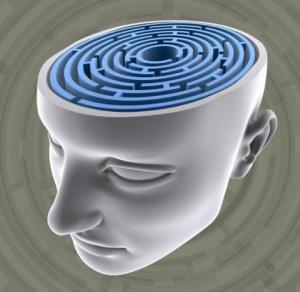
Social, economic problems increase schizophrenia patients


Schizophrenia is a mental disorder characterized by a disintegration of thought processes and of emotional responsiveness. It most commonly manifests itself as auditory hallucinations, paranoid or bizarre delusions, or disorganized speech and thinking, and it is accompanied by significant social or occupational dysfunction. The onset of symptoms typically occurs in young adulthood, with a global lifetime prevalence of about 0.3–0.7%. Diagnosis is based on observed behavior and the patient's reported experiences.

Genetics, early environment, neurobiology, and psychological and social processes appear to be important contributory factors; some recreational and prescription drugs appear to cause or worsen symptoms. Current research is focused on the role of neurobiology, although no single isolated organic cause has been found. The many possible combinations of symptoms have triggered debate about whether the diagnosis represents a single disorder or a number of discrete syndromes. Despite the etymology of the term from the Greek roots skhizein (σχίζειν, "to split") and phrēn, phren- (φρήν, φρεν-; "mind"), schizophrenia does not imply a "split mind" and it is not the same as dissociative identity disorder—also known as "multiple personality disorder" or "split personality"—a condition with which it is often confused in public perception.

The mainstay of treatment is antipsychotic medication, which primarily suppresses dopamine (and sometimes serotonin) receptor activity. Psychotherapy and vocational and social rehabilitation are also important in treatment. In more serious cases—where there is risk to self and others—involuntary hospitalization may be necessary, although hospital stays are now shorter and less frequent than they once were.

The disorder is thought mainly to affect cognition, but it also usually contributes to chronic problems with behavior and emotion. People with schizophrenia are likely to have additional (comorbid) conditions, including major depression and anxiety disorders; the lifetime occurrence of substance abuse is almost 50%. Social problems, such as long-term unemployment, poverty and homelessness, are common. The average life expectancy of people with the disorder is 12 to 15 years less than those without, the result of increased physical health problems and a higher suicide rate (about 5%)
~~~~~~~~~~~~~~~~~~~~~~~~~~~

Health experts have said that social, economic disorder, political anarchy and terrorism [+ loadshedding] are increasing the number of Schizophrenia patients and further deteriorate the situation.

This was stated by health experts while addressing concluding session of a training work for the prevention and treatment of schizophrenia here under the auspices of a non-governmental organization Horizon in the auditorium of Ibadat Hospital.

The four-day training workshop was participated by 50 doctors and psychiatrist from Khyber Pakhtunkhwa, Lahore and Islamabad and shared their expertise with the participants.

The purpose of the workshop was the creation of awareness amongst the people regarding awareness for the prevention and treatment of schizophrenia.

Principal, Rehman Medical College, Professor Dr. Tariq Mufti was chief guest in the opening session.

Addressing the participants of the workshop, former principal Khyber Medical College (KMC) and chairman Horizon, Psychiatrist, Professor Dr. Khalid Mufti said that the severity of the disease is affecting one percent population of the world and the numbers of its victims in Pakistan are 1.4 million.

He said that during last 30 years Ibadat Hospital has provided treatment to 24000 schizophrenia patients and provided free medical counseling and medicines to 600 patients.

The patients are also provided training in diagnostic and treatment of the disease.

Dr. Khalid Mufti explained that the disease is diagnose in the age between 15 to 35 years in which about 6 per cent have courage to bear the severity and long duration of the disease and they used to make suicide attempt due to higher depression.

He said that situation in developing countries is worse where over 90 per cent schizophrenia patients start the use of narcotics (hashish) due to lack of access to treatment, which turns their lives more vulnerable.

The psychiatrist said that the patients of disease usually go for traditional means, particularly non-medical means of treatment, which increase their miseries.

He urged the participants for creating awareness at their own level in this regard and encourage them toward treatment through qualified doctors.

The representative of World Health Organization (WHO), Professor Dr. Farid Minhas and Professor Dr. Saeed Farooq gave detailed briefing regarding the disease.

They said that hardwork and domestic problems further increases the miseries of the patients of disease.

They said that schizophrenia affect the patient mentally and break their spirit.

The disease, they said could be prevented through counseling with a qualified doctor and use of effective medicines, saying that with the passage of time 50 per cent patients recover of the disease.

In the concluding ceremony, the chief guest, Professor Dr, Farid Minhas distributed certificates and shields amongst the participants of the workshop.
http://pakobserver.net/detailnews.asp?id=117770


Schizophrenia - Symptoms, Diagnosis, Treatment of Schizophrenia ...

health.nytimes.com › Times Health Guide › s
7 Feb 2010 – Schizophrenia is a complex illness. Mental health experts are not sure what causes it. However, genetic factors appear to play a role. ...

Fixing up Pakistan is not nuclear science


“Fixing Pakistan is not nuclear science. It requires will and the ability.” I have been repeating this phrase ever since I started seeing Pakistan’s issues up-close from the grassroots level. The solutions are already worked out by the best of Pakistani brains and the best of foreign experts. They have been debated over and over again. However, unfortunately, they simply have not been implemented, since those in the driving government seats have different agendas.
In a country, which has natural resources boasting copper, iron ore, gold, rock salt, minerals, natural gas, water, agriculture, industries, human demographic dividend, and tourist attractions second to none, is it difficult to turn that country’s GDP around? It cannot possibly be nuclear science? It surely has to be common sense.
There have been several great austerity plans written in this country and then shelved. Great 2030 vision documents written. Great Planning Commission Annual plans written. Many donor reports written. Had any of them been taken seriously, the GDP would have been pushed up. Surely, many more jobs would have been created. What a lot of intellectual resource has gone into suggesting how to fix Pakistan’s economy and we are sitting close to a failed state! With the best of Pakistani brains, who are capable of running their corporations profitably, themselves making money through kosher means, do you honestly think that we need to be at growth less than half of the rest of Asia, and inflation more than double the rest of Asia? Is the energy crisis so dismal that there can be no solution to it? I doubt very much. Taking care of the thieves, who have pocketed the commissions that have led Pakistan into such crises, is not difficult. It simply requires the rule of law.
Forty-eight percent of Pakistanis are food deprived, despite Pakistan being an agricultural country. Do we not have the best of farmers, the best of techniques well researched, the rivers and the water conservation strategies? And yet every Pakistani is indebted to the world and is hungrier today. The ruling elite is stealing ruthlessly from every State institution and turning it financially bankrupt. Do we not know how to plug the leakages in State-owned enterprises? Does it not take one solid managerial team of professionals, who can turn the corporations from bankruptcy to success? Are we so poor in human resources that we don’t have such people? I don’t think so. Such people exist and they must be reading this article, as we speak. They just need to volunteer their expertise for the sake of the nation and be part of their own party, their own fix it team. Every Pakistani has to give to an ailing economy what they do best. Every possible corruption discovered in these corporations or in the canal water thefts has to be prosecuted. It simply requires the rule of law.
Common Pakistanis are being kidnapped by gangs, who are patronised by government ministers, but the ruling elite have private militia that protects them. Do we not know where the ministers keep the kidnapped? Do we not know where the political party torture cells are located, which kuccha areas the tribal warlords take the kidnapped victims to? Of course, the intelligence does and so do most citizens, thanks to a vibrant media. It is just a matter of putting such people behind bars. I say you put one minister, one political party representative behind bars for such a crime and that will take care of all the others. It simply requires the rule of law.
Ethnic, sectarian and religious minorities are getting slaughtered by banned terrorist organisations with linkages to Al-Qaeda, but the ruling elite are protecting these organisations. We know where these banned organisation chiefs live. But we choose to live with them. In the process, we have almost reduced Pakistan to a banana republic where the jungle law prevails. With the result that investment freezes and flees. Brain drain doubles up. Is the ‘fix it’ not simple. Prosecution of the criminals. It simply requires the rule of law.
Seven million children are not in schools. However, those in schools are in danger because their buildings are dilapidated, and most of them between the ages of 6 to 16 cannot read and write since the teachers are mostly absent. Yet, the ruling elite are siphoning off the development funds allocated to building schools. A careful execution of the “fix education” reports already written by the experts and debated at length on every possible intellectual forum will fix it. A firm hand is required to punish those siphoning off education funds and not teaching. It simply requires the rule of law.
Millions have been displaced by earthquakes, glacier meltdown and floods, but the ruling elite are merry-making with the international donations they receive. An execution of the earthquake plans from 2005, an execution of the global impact change studies reports, an execution of the flood reports, a fixing of the irrigation and drainage system, and a close execution of the bund manuals. The list is long and known to every environmental expert. A penalty should be awarded to all those criminals, who have made millions of Pakistanis suffer damages due to their corruption in the irrigation systems. It simply requires the rule of law.
Half of the labour force is protesting on the streets for minimum wage, but the ruling elite are busy shelling them and implicating these innocent protestors in cases of terrorism, they are asking for their rights - an enforcement of labour laws, of regularisation laws, and a water-tight merit policy to put competence back into government. It simply requires the rule of law.
Our soldiers and civilians are being needlessly killed by drone attacks and Taliban militant bombs alike, but we are still trying to figure out whether both breach our sovereignty or not. Negotiation and firm hand is the order of the day. It simply requires the rule of law.
Is our first priority not simply the implementation of existing rules of business and the execution of the rule of law? It is truly not nuclear science.

By Marvi Memon, is a former Member of the National Assembly of Pakistan.
http://nation.com.pk/pakistan-news-newspaper-daily-english-online/Opinions/Columns/03-Oct-2011/Its-not-nuclear-science

Real Enemy & Enemy within


We are printing Rs300 crore a day every day of the calendar year. That’s what inflation is all about. To be certain, the meanest component of inflation is food inflation because the poorer one is the higher percentage of his or her income goes toward buying food. And in this Land of the Pure there’s some 12 crore to 13 crore Pakistanis earning Rs200 or less a day. Inflation, in fact, is the biggest of all our problems (Gallup Pakistan; Jan 27, 2011). Just who is behind this printing of notes – America, India or Israel?

According to our very own National Power Control Centre, we have an installed capacity of 18,167 MW – and that is roughly 10 percent or 15 percent more than currently needed. The problem, therefore, is not capacity but the circular debt. The federal government, KESC, Fata, our private sector and the government of Balochistan collectively owe Pepco a colossal Rs250 billion. Pepco in return owes the IPPs, Wapda, our oil sector and our gas sector Rs140 billion. Just who is behind this loadshedding – America, India or Israel?

Here are five facts about Pakistan Railways (PR): One; 384 out of 540 diesel engines are out of order. Two; PR has 16,433 carriage wagons out of which 8,005 are not on tracks. Three; the US has offered a $400 million loan for the purchase of 150 locomotives. Four; Haji Ghulam Ahmed Bilour, our railways minister, has decided to lease 50 engines from India. Five; PR’s deficit stands at Rs40 billion. Just who is behind this mess at PR? Haji Ghulam Ahmed Bilour is not an Indian agent. Javed Iqbal, chairman railways, is not an American agent.

Here are four facts about PIA: One; 10 out of 39 PIA aircraft have been grounded because of technical faults – that’s 25 percent of the entire fleet. Two; Nadeem Khan Yousufzai is the MD. Three; accumulated losses are fast approaching Rs100 billion – 100 followed by nine zeros. Is Nadeem Khan following some top-secret Israeli agenda? Isn’t Yousufzai one of the largest of all Pushtun tribes?

Of all the evils we have ever nurtured, substituting public school curriculum with hate literature has to be one of the most evil (National Education Policy 1979). We have 157,360 primary, 41,330 middle and 24,792 secondary schools. Mossad has 1,200 employees and we have more than 1.2 million teachers teaching – or is it preaching – at our schools. To be sure, public school curriculum is a powerful driver behind conflict throughout the length and breadth of Pakistan. Just who is behind this master conspiracy – America, India or Israel? Is Sanjeev Tripathi, the head of RAW, also a member of our curriculum wing?

Next. Between 1947 and 2008 we took on Rs6 trillion worth of public debt. Over the past three years our public debt has gone from Rs6 trillion to Rs12 trillion. Every man, woman and child in Pakistan is now indebted to the tune of Rs61, 000. Imagine; the Government of Pakistan continues to borrow additional funds and that too at the rate of Rs500 crore a day every calendar day of the year. Is Pakistan’s Debt Policy Coordination Office working under the direction of Tamir Pardo, the current director of the Mossad?

Who said that facts are the enemy of truth?

TEnemy within by Dr Farrukh Saleem, he writer is a columnist based in Islamabad. Email: farrukh15@hotmail.com
http://www.thenews.com.pk/TodaysPrintDetail.aspx?ID=70406&Cat=9

~~~~~~~~~~~~~~~~~~~~~~~~~


Who is our real enemy?

 By Ghazi Salahuddin 

America has generally been our beloved infidel. It is, as the poet might say, too much with us, getting and spending. The walls of so many of our living rooms are adorned with family photographs that also present, in the background, an American landmark or landscape. It would be a rare middle-class household that has no close relative studying or settled in the United States. But in spite of these familial bonds, we remain very suspicious of American policies towards Pakistan.

This suspicion rose in a crescendo this week, in response to remarks made by Admiral Mike Mullen, the outgoing Chairman of the Joint Chiefs of Staff, before a Senate committee. His assertion that the Haqqani network was a “veritable arm” of Pakistan’s ISI was a shattering indictment of our armed forces in the context of a professed alliance against terrorism.

It is true that Mike Mullen’s outburst had come in the wake of similar though more carefully worded accusations by other high US officials and the ‘trust deficit’ between the two countries had already risen to a critical point. But Mullen’s farewell testimony certainly touched a raw nerve, raising the prospect of a diplomatic breakdown.

It was last Sunday when our news channels abandoned their routine programmes and competed with each other with hurriedly put together talk shows, featuring the usual suspects. Suddenly, all our other troubles receded into the background and a feverish tempo was built on the possibility of a diplomatic disaster in our relations with the United States. An extraordinary meeting of the corps commanders was held in the GHQ and it lasted for six hours. One report in the New York Times spoke about “the media frenzy and warmongering”.

Our official response, too, was quite blunt. Charges that Pakistan had any connections with the Haqqani network were flatly rejected. In a commentary published in The Washington Post on Friday, David Ignatius, a writer who knows Pakistan well, reviewed the latest situation in the wake of Mike Mullen’s retirement. He said: “But surely this is a sick relationship when the partners have to go to the brink of open confrontation to get the other side to listen. If they were a married couple, you would send them to a counsellor, or, failing that, a divorce lawyer”.

Ah, but the really sick relationship that the Pakistani establishment has fostered is not with the United States but with the monster of extremism we can describe as the enemy within. It is a relationship that our rulers are not even willing to recognise as a major element in the national crisis that we are confronted with. Unfortunately, a rational debate on the state of the nation is not being held, mainly because of the dominance of intolerance and bigotry at all levels.

In any case, by the time that the All Parties Conference was held on Thursday, some diplomatic steps had been taken to bring down the temperature. The White House did not endorse Mullen’s description of ISI’s links with the Haqqani network, though it affirmed the US stance that Pakistan did have links with a network that had safe havens in North Waziristan.

As political theatre, the APC monopolised the nation’s attention for some time. But what has it achieved in real terms? Initially, it was amusing to see so many of them at the conference – around sixty leaders who sought to redefine our national security policies with direct reference to the latest tension with the United States. A large contingent, call it a regiment, represented the religious parties. You can imagine who must have written the script for the play. But the big surprise, the kind of twist that pulls the audience to a dramatic presentation, came at the end when a 13-point joint resolution was approved. And lo and behold, this resolution does not even mention the United State by name. It does not refer directly to why the conference was called in such a hurry.

That said, I am more concerned here with another omission. It does not condemn terrorism, terrorists or religious militancy. Why? It may be argued that they avoided naming the United States because they want to retain their partnership with that country. Is it the same with the Taliban and other home-grown militant outfits operating in Pakistan?

It is not my argument that the anti-American sentiment that has surged in the country, whipped up also by the religious parties, is without any reason. At the same time, it boggles the mind that no political agitation is mounted against the Taliban and other terrorist networks that have attacked our mosques and schools and have indulged in sectarian killings.

Our security forces have specifically been the target of these terrorists. And yet, there is no focus on them and no attempt to understand why Pakistan has been the worst sufferer in what was supposed to be war on terror.

Of course, the casualties that Pakistan has suffered are repeatedly highlighted to vindicate our massive contribution to the war on terror. But who are these terrorists and extremists who have left the country bleeding and in disarray? Where did they come from? Why have our rulers not been able to deal at least with militants who indulge in sectarian violence – what is happening to Shia Hazaras in Balochistan being a case in point?

In a television interview, former prime minister of Britain, Tony Blair, said that Pakistan is “paying heavily” for its mistakes in the 1970s when it starting mixing religion with politics and promoted extremism. Blair must have been out of touch with Pakistan. What began with Zia-ul-Haq has continued and has flourished. In this process, we also have the insurgency in Balochistan and recurring spells of killings in Karachi.

Do our military leaders lose any sleep pondering over the deepening sorrows of Pakistan? Do they sincerely wish to understand the causes of our present disarray? Yes, our political leaders also bear some responsibility, the ones who are sometimes in power and not the bit players who congregated on Thursday in that palace on the hill known as the prime minister’s house. However, there should be no doubt about where the real power belongs and who presides over our security and foreign policies.

Yes, it is another relationship – between the civilian and the military institutions in Pakistan – that is fundamentally flawed and problematic. We cannot ignore the fact that we have one of the largest standing armies in the world in a society that has such terrifyingly low indicators in social development. What is most crucial is that we are so insecure. Is this so because we are surrounded by men who hold guns, many of them not under any military discipline?

The writer is a staff member. Email: ghazi_salahuddin@hotmail.com
http://www.thenews.com.pk/TodaysPrintDetail.aspx?ID=70407&Cat=9

Patience of Pakistani People

Retrospection